


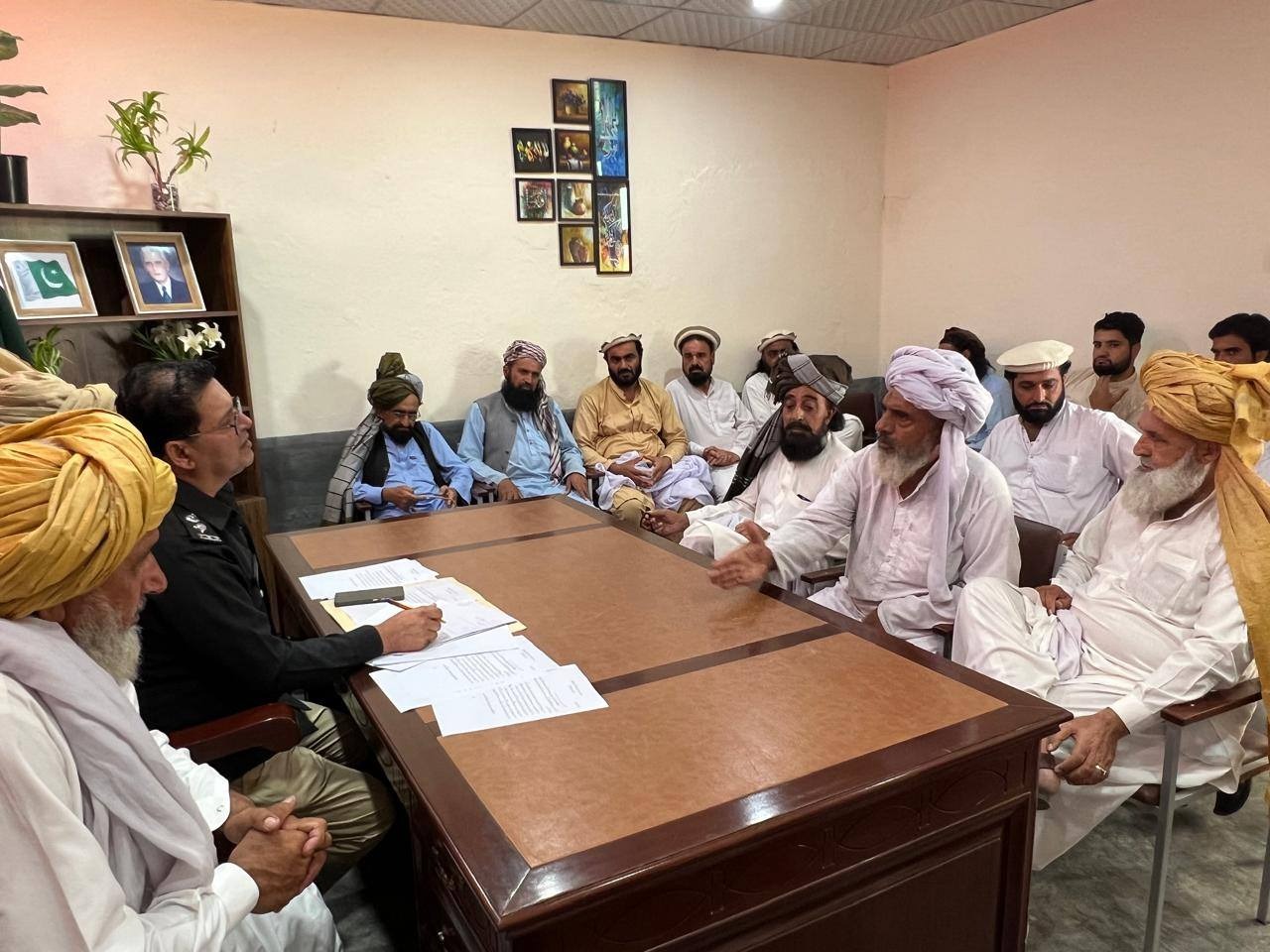
For the first time, a Dispute Resolution Committee (DRC) has been established in Upper South Waziristan to resolve public issues and reduce the burden on courts. According to District Police Officer (DPO) Arshad Khan, DRC offices have been set up in Sararogha and Sarwakai, while an oath-taking ceremony was held for committee members in Sararogha, and the selection of secretaries has also been completed.
The DPO stated that the committee will operate with five judicial panels, working five days a week, with Fridays and Saturdays as holidays. Members will be provided with all necessary facilities. He added that the purpose of the DRC is to address public issues transparently and fairly, ensuring quick justice and easing the load on courts.
Speaking at an introductory session with DRC members, Arshad Khan said the traditional Jirga system has historically resolved complex disputes peacefully under local customs. “The DRC is designed to carry forward this tradition,” he said, adding that the new secretary was unanimously elected during the session.
Also Read: Bishnoi, Pir Baba Bazaar in Ruins, Remote Villages Cut Off After Buner Floods
Committee member Malik Haji Ramatul Mehsud said the greatest advantage of the DRC is reducing the need for court cases, which provides relief to poor citizens who cannot afford legal expenses. He added that with sincere members, long-standing issues that remained unresolved for years could now be settled within days.
Social activist Arif Zaman Burki also welcomed the initiative, noting that the Jirga system has always been a preferred mechanism in tribal areas, as disputes involving land and even murder cases were traditionally settled quickly, while civil cases in courts often take years. “In a Jirga, both parties present their cases themselves, which gives them a sense of satisfaction and trust,” he said, explaining why locals have confidence in the system.
However, he stressed that the strength of the DRC depends on transparency in member selection and merit-based appointments. “If the committee includes honest individuals who are free from undue influence, this system can become an effective platform for providing quick and affordable justice to the people,” Burki concluded.

1.jpeg)

Comments
No comments yet. Be the first 🙂