


Perhaps the easiest thing in today’s world has become forming instant opinions about others. Open social media, look at someone’s picture, and within moments a verdict is issued: this is right, that is wrong, why did she wear this, why did he do that. In just a few seconds, we begin to see ourselves as judges, guardians of morality, and the ultimate standard of right and wrong.
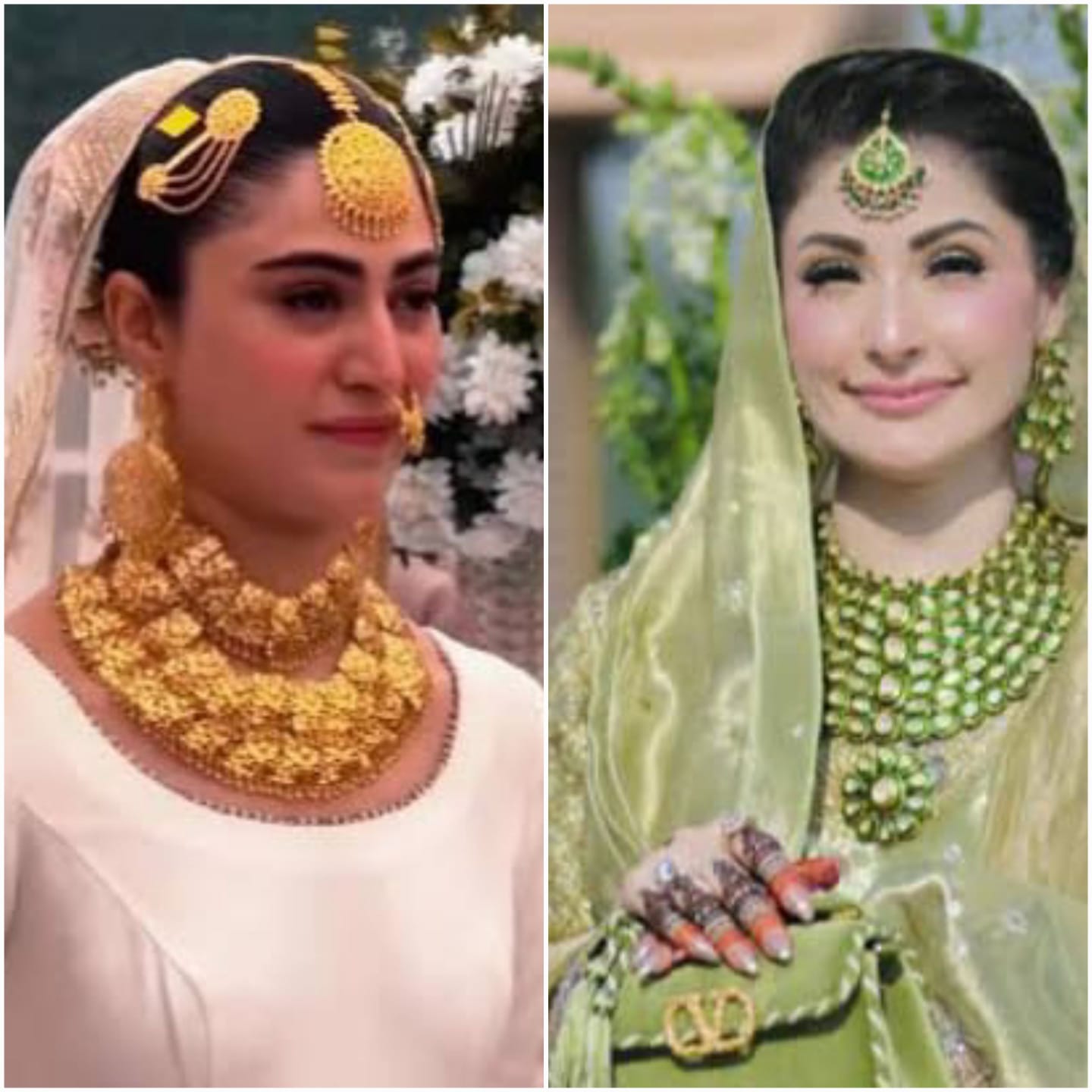
This behavior becomes even more intense when it involves a public figure. Recent weddings — that of Maryam Nawaz’s son and actress Hina Afridi — are clear examples of this trend, where even moments of happiness were turned into arenas of criticism, taunts, and moral lectures.
Punjab Chief Minister Maryam Nawaz’s son, Junaid Safdar, got married in Lahore in ceremonies attended by close relatives, friends, and family members. The mehndi, baraat, and walima events were held with beauty and proper arrangements.
At the mehndi ceremony, Maryam Nawaz wore a vibrant yellow, eye-catching lehenga by renowned Pakistani designer Nomi Ansari. Such designer outfits usually cost over five hundred thousand rupees. On the day of the baraat, she chose a premium bridal outfit by famous designer Iqbal Hussain, estimated to be priced between two to four hundred thousand rupees.
Photos from the wedding events went viral on social media and received significant attention. Many users praised the outfits, while others began criticizing her for appearing more prominent than the bride.
Another widely discussed point was that just days before the wedding, the Punjab Chief Minister had made a decision regarding the “one-dish” law at weddings to reduce extravagance. However, when multiple dishes were seen at her son’s wedding, questions arose: “Wasn’t the law for one dish? Why are there so many dishes here?”
It is fair to acknowledge that Maryam Nawaz holds a public office, and her governmental decisions and policies fall within the scope of criticism. Questioning the one-dish law may be valid to some extent. The problem begins, however, when opinions cross into passing judgments about personal matters.
Similarly, actress Hina Afridi’s wedding also became a topic of discussion on social media. On her baraat day, she chose white and golden tones instead of the traditional red, which led many people to express surprise and disapproval.
The reality was that Hina Afridi’s mother is no longer alive, and she wanted to wear her mother’s jewelry, which looked more beautiful with lighter colors.
Hina Afridi also chose soft shades for her mayun, dholki, mehndi, and walima events, reflecting her personal choice and emotions. This was her personal right, yet people still felt the need to give opinions without understanding the reason behind her choice.
Also Read :Celebrated Across Borders, Condemned at Home
There is a strange contradiction in our society. We freely discuss other people’s clothes, colors, and wedding styles as if we have the right to pass verdicts on their lives. In reality, every person has a private life and should have the freedom to celebrate their happiness as they wish.
Interestingly, the customs of dowry and gold in weddings are rarely questioned; instead, they are often taken with pride. No uproar is raised against these practices, nor are they labeled wrong. But as soon as it comes to someone’s outfit or color choice, everyone feels entitled to give an opinion.
It is also a bitter truth that we claim to be champions of morality, yet remain silent on real social evils. We prefer to speak on easy topics but avoid confronting harsh realities.
Every individual makes choices according to their preferences, emotions, and culture. Weddings, clothing, colors, and ways of celebration are personal choices. If we want our own preferences to be respected, we must learn to respect the choices of others.
Sitting on social media and commenting on others’ happiness is easy, but true morality lies in not interfering in other people’s private lives.
In the end, it can be said that wedding celebrations, clothing choices, and events are personal preferences. If we learn to respect others’ lives, criticism will decrease, our society will become more civilized, and every happy occasion will truly remain a moment of happiness.
Note: This article reflects the personal opinion of the writer, and the organization does not necessarily agree with it.






.jpeg)
Comments
No comments yet. Be the first 🙂