


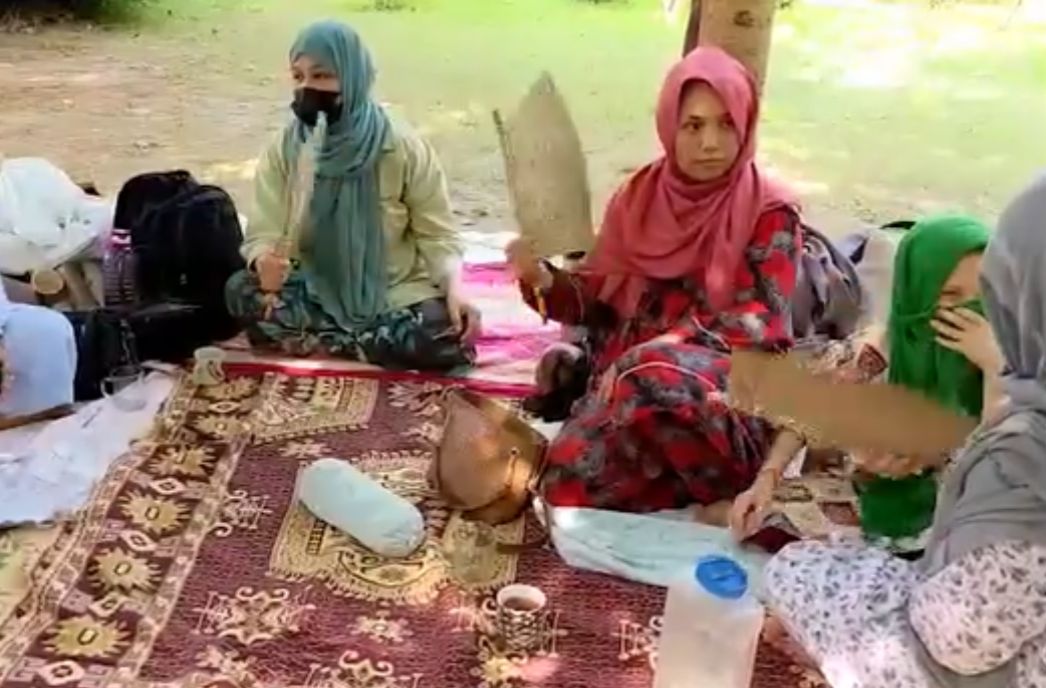
In the heart of Islamabad, where government buildings, markets, and orderly streets paint the picture of a calm city there is a corner that carries the scent of despair and exhaustion. The G-6 area has become a temporary refuge for dozens of Afghan families who, after Pakistan’s decision to arrest and deport undocumented migrants, were forced to abandon their homes.
Among them are women, children, and the elderly. Some have lived in Pakistan for more than four decades; many were born here and consider it their only home. Today, their shelter consists of torn plastic sheets and pieces of tarpaulin tied to the branches of trees in a public park.
When it rains, water drips through their makeshift roofs, soaking worn-out carpets and thin bedding. The cold seeps into their bones, and children lie awake at night from fear and shivering. One mother, cradling her infant to keep him warm, says:
“I don’t know how we will survive this winter. We have no house, no work, and no one who asks about our condition.”
A 50 year old man, who calls himself the “second generation” of Afghan migrants in Pakistan, speaks bitterly:
“We have lived here for 40 years. We were born here, went to school here, worked here, and paid taxes. But with one order, we lost everything.” He emphasizes that he has never seen Afghanistan, and if he is sent there, he will be like a stranger in a foreign land.
Also Read: Petition Filed in Peshawar High Court Against Immoral Activities on TikTok Live
Children bear a heavy share of this suffering. Many were students in government or private schools but have now been forced to stop attending due to unstable living conditions. Maryam, a mother of three, says:
“My son is in grade six. Every day he asks why he can’t go to school anymore. I have no answer except to tell him to wait.”
The problem is not only the absence of shelter. Families also speak of daily harassment, sudden police raids, and the constant fear of arrest. Rahmatullah, a 25 year old man, says:
“Sometimes the police come at midnight and wake everyone up. They ask for documents we don’t have and threaten us.” He adds that even charitable assistance is hard to receive because many donors fear legal repercussions.
Yet, amidst this hardship, signs of solidarity remain. Some families share food and clothing; women bake bread together, while men search for daily labor to provide at least something for the children.
In one corner of the park, a group of children plays with an old, worn out ball. Their laughter briefly breaks the heavy silence, but soon their eyes drift back toward the fragile tents. One of them, only nine years old, says:
“I just want us to have a home again, so when it rains, I don’t get wet.”
These families share a single demand: recognition, support, and the preservation of human dignity. They call on the Government of Pakistan to consider their circumstances and ease legal procedures for those who have lived in the country for years. At the same time, they appeal to the United Nations and international organizations not only to provide urgent assistance but also to stand with them politically and legally.
One community elder says:
“We do not want to be a burden. We want to work, pay taxes, and live like everyone else. We just need the chance.”
As the cold of winter approaches quickly, the future of these families looks more uncertain than ever. Yet, amid the difficulties, something remains alive hope and the will to survive. Hope that, though fragile, can still become a light for better days through compassion and solidarity.

.jpeg)
Comments
No comments yet. Be the first 🙂