


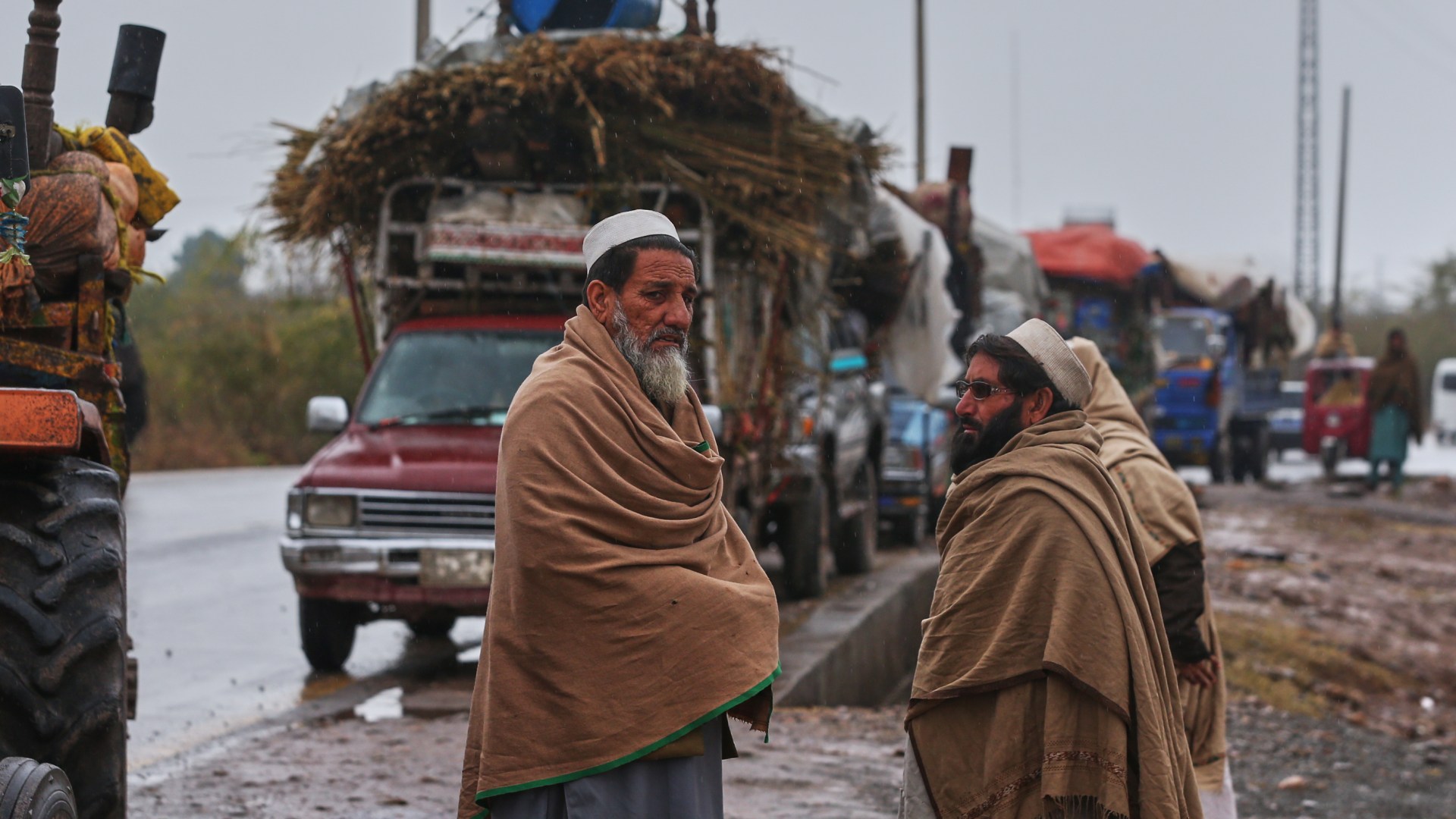
The displacement of residents from Tirah Valley has exposed a familiar—but dangerous—pattern in Pakistan’s governance of conflict-affected regions: decisions taken behind closed doors, denial once consequences surface, and political blame-shifting when humanitarian costs become impossible to ignore.
As snow-choked mountain passes paralysed life in Tirah this winter, the central question was never whether the displacement was forced, but who would accept responsibility for it.
In early January 2026, thousands of internally displaced persons (IDPs) were stranded in extreme weather. Roads were blocked by heavy snowfall, slippery terrain, and traffic congestion caused by vehicles moving in opposite directions. Rescue and relief operations remained severely constrained, and several lives were reportedly lost. Despite the scale and visibility of the crisis, coordination between federal and provincial authorities was conspicuously absent.
The federal government, through Information Minister Ata Tarar, described the movement from Tirah as “voluntary,” insisting that no military operation was underway beyond routine intelligence-based actions. This claim stood in sharp contrast to the response of the Khyber Pakhtunkhwa (KP) government, which allocated nearly Rs 4 billion for IDP relief—an allocation that implicitly acknowledged organised displacement rather than seasonal migration.
The contradiction deepened when Defence Minister Khawaja Asif reiterated that migration from Tirah was seasonal, citing a British colonial account written more than 140 years ago. Such reasoning ignored profound changes over the past two decades.
Also Read : District Khyber Announces Staggered Rent Aid Schedule to Manage IDP Rush
Before 9/11, Tirah’s isolation, lack of road access, and limited food and medical supplies made winter migration common, largely among families with secondary residences in Bara or Peshawar. Since then, sustained military deployment, new road infrastructure linking Bara to Tirah, and improved supply chains have fundamentally altered settlement patterns. Today, most residents live in the valley year-round.
Crucially, the displacement did not occur suddenly. Over the past year, multiple meetings were held between local elders, civil administration officials, and security representatives. According to participants and community accounts, residents were repeatedly asked to vacate their homes.
These demands were resisted through public rallies and political mobilisation. Meanwhile, intelligence-based operations continued, reportedly resulting in more than forty civilian casualties, further intensifying local opposition.
Eventually, a 24-member tribal committee representing various clans entered negotiations with the district administration and senior military officials. An informal understanding was reportedly reached: residents would temporarily vacate the valley until April, in exchange for assurances of facilitation, dignified displacement, and guaranteed return.
However, as the humanitarian crisis deepened and media scrutiny intensified—both nationally and internationally—federal and provincial authorities publicly distanced themselves from the decision.
The agreement was never put in writing, making it difficult to formally fix responsibility. Yet the participation of civil administration officials in these meetings suggests that the provincial government was not merely a bystander. Members of the tribal committee have since gone into hiding, fearing repercussions should they disclose who authorised the displacement.
It was in this context that KP Chief Minister Sohail Afridi adopted a confrontational public stance. At a large gathering in Jamrud last Sunday—labelled a jirga but lacking its traditional consultative legitimacy—he directly asked residents whether their displacement was voluntary.
The crowd’s response, overwhelmingly describing it as forced, directly challenged the federal government’s narrative. Afridi placed responsibility on the federal government and the security establishment, framing the Tirah crisis within his broader critique of post–February 2024 governance and what he has repeatedly described as a “stolen mandate” following the imprisonment of PTI leader Imran Khan.
Yet Afridi stopped short of announcing an immediate plan for the return of IDPs. Instead, he proposed consultations across other merged districts facing similar security-related disruptions and signalled possible political escalation, including a march toward Islamabad.
This posture must also be read against PTI’s announcement of a wheel-jam and shutter-down strike on February 8, marking two years since the 2024 general elections, which the party continues to describe as rigged.
In this context, the federal government appeared to soften its stance, favouring political engagement over continued street-level confrontation. Combined with mounting criticism over Tirah, worsening security conditions, and recent attacks in Balochistan, the crisis exposed the limits of fragmented counterinsurgency approaches and underscored the need for national political consensus.
Afridi’s public condemnation of these attacks—both at the Jamrud gathering and subsequently—signalled a pragmatic willingness to cooperate on national security, despite ongoing political disputes.
His decision to meet Prime Minister Shehbaz Sharif, after previously refusing to attend apex committee meetings involving civilian and military leadership, reflected this shift. While Afridi continues to challenge the legitimacy of the federal government, the engagement itself acknowledged that prolonged non-cooperation carries heavy financial, administrative, and humanitarian costs for the province.
At the Jamrud gathering, Afridi even hinted at organising a public telethon to raise donations from Pakistani citizens and the diaspora to support IDPs—a grim reminder of KP’s financial distress. The province continues to accuse the federal government of withholding nearly Rs 5 trillion in dues related to hydropower revenues, counterinsurgency expenditures, and the FATA merger package.
The Tirah displacement, therefore, is not merely a humanitarian tragedy. It is a case study in how denial erodes state credibility, how ambiguity deepens civilian suffering, and how political rigidity ultimately gives way to necessity. Fixing responsibility is not about assigning blame for its own sake; it is essential for restoring trust, ensuring safe and voluntary returns, and preventing future displacements rooted in opaque decision-making.
For the people of Tirah, the demand remains clear: transparency about who ordered their displacement, accountability for its mismanagement, and a civilian-led security framework that prioritises human security alongside counterinsurgency objectives. Until that happens, political ice may melt between Islamabad and Peshawar—but it will remain frozen in the mountains, and in the lives of those forced to leave them behind.

.jpeg)
Comments
No comments yet. Be the first 🙂