


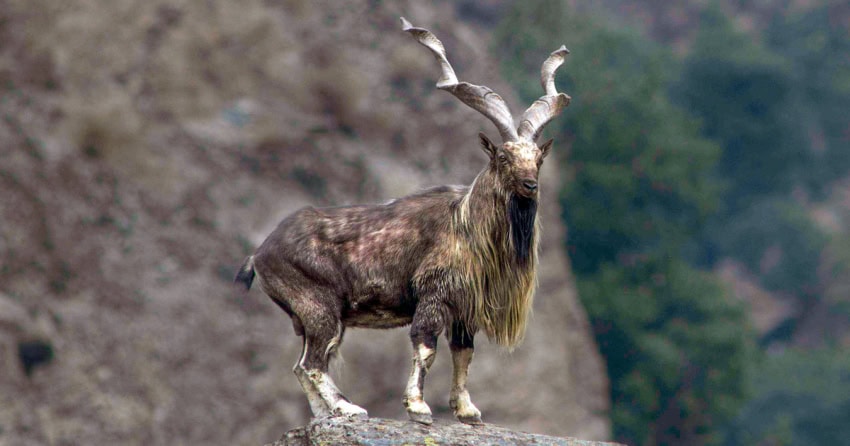
A dispute has emerged between the federal and provincial wildlife departments over non-exportable trophy hunting permits for Markhor in Khyber Pakhtunkhwa. The federal government has banned the hunting of non-exportable Markhor, Ibex, and Grey Goral.
In this regard, the Chief Conservator of Wildlife Khyber Pakhtunkhwa wrote a letter to the Secretary of the Forest Department, stating that the ban was imposed because prior permission from the federal government was not obtained.
According to the letter, in October 2024, permission was granted for the hunting of six Markhor under the non-exportable quota in Kohistan and Chitral, and the provincial wildlife department had implemented this.
The letter also stated that the ban imposed by the federal agency, the Sites Management Authority, contradicts its own decision from last year, as approval for non-exportable quotas of Markhor, Ibex, and Grey Goral had already been granted. It further emphasized that the non-exportable trophy hunting quota falls under provincial jurisdiction, and the provincial government’s position on this matter is completely valid.
According to the document, the provincial government has so far auctioned 10 Markhor, 31 Ibex, and 6 Grey Goral hunts.
During the current year, nine non-exportable Markhor permits were successfully auctioned, generating revenue of $553,000, and the permits were issued to the winning bidders.
The letter warned that objections to the non-exportable hunting quota could harm the country’s reputation. Statistics indicate that the total population of Markhor in Khyber Pakhtunkhwa is 6,222, Ibex 2,920, and Grey Goral 394, while the number proposed for hunting is below the set limits.
Meanwhile, Secretary of the Forest Department Khyber Pakhtunkhwa, Junaid Khan, said that the matter with federal agencies will be resolved according to the law. He stated that the population of Markhor and other wildlife species in Khyber Pakhtunkhwa exceeds the required standards.
According to Junaid Khan, the current season’s Markhor permits have generated over $550,000 in revenue, which will be spent on the welfare of local communities in the hilly areas.





.jpeg)
Comments
No comments yet. Be the first 🙂