


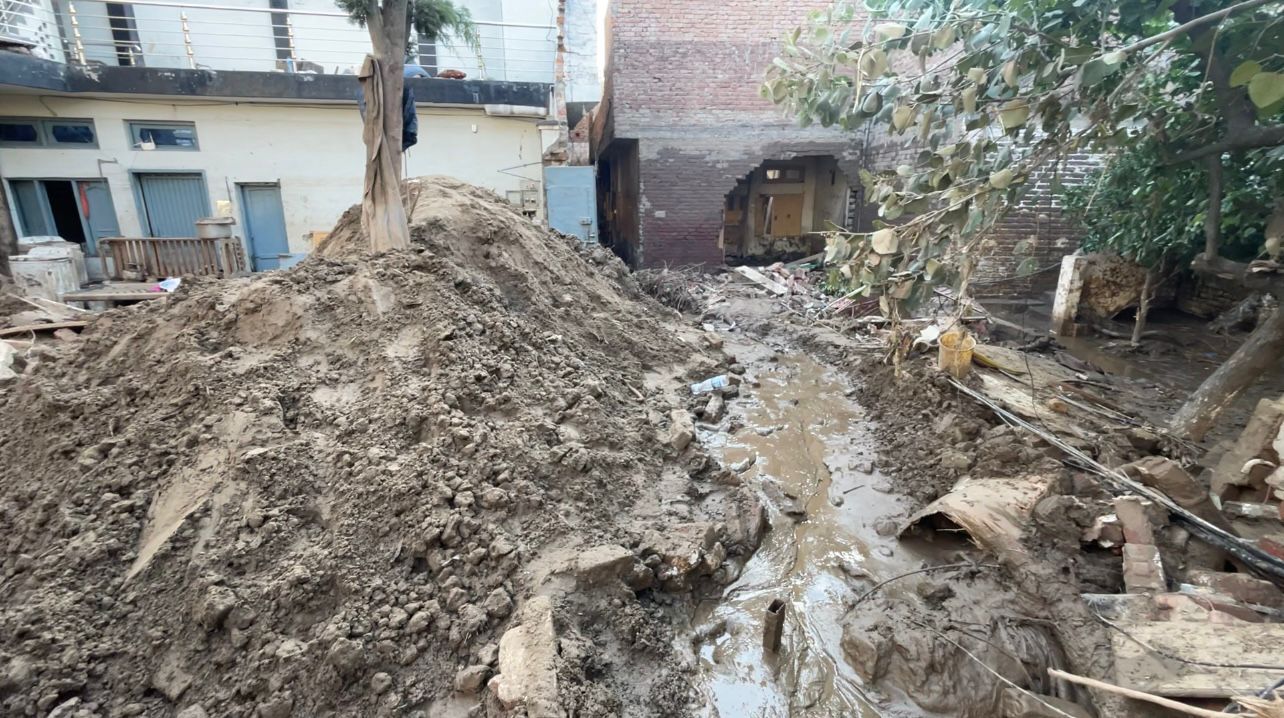
For days, unrelenting rain has paralyzed life in several areas of Buner and Mingora, leaving residents gripped by fear that a disaster like the recent cloudburst in Buner could strike again.
Samia, a 38-year-old resident of Mingora, says she spends hours sitting in a corner of her room with her children, consumed by the thought that the rain just won’t stop. “What if what happened in Buner happens here? This fear has left me mentally exhausted and anxious,” she confides.
Her anxiety deepened when a flash flood surged through a nearby seasonal stream. “I felt like any moment our house would be swept away. Every night passes in restless worry,” she says.
Samia’s experience mirrors that of many other women. Sidra, a mother of three from the same area, shares, “Whenever it rains, my heart races. I feel like this might be my last day. The sound of rushing water sends me into extreme stress.”
This fear isn’t fleeting, it’s taking a toll on mental health. Some women panic at the mere mention of rain. Ayesha, a student from Mingora, says, “Whenever I think about the hardships faced by people in Buner, I lose interest in everything. It feels like a constant weight on my mind.”
Also Read: UNDP Ramps Up Aid for Flood-Hit Communities in Pakistan Amid Ongoing Crisis
The psychological strain is not limited to women. Men, too, are struggling. Journalist and social worker Haris Yousafzai recalls his haunting experience: “While distributing rations after the rains, I saw tears in the eyes of elderly people. That image hasn’t left me. Since that day, I can’t sleep at night. My heart feels restless, and I’m overwhelmed by the fact that the government provided no support, people were helping each other on their own.”
Children are also deeply affected. Their innocent minds are entangled in fear of floods. Bakht Zareen from Alaabad explains how her young son constantly seeks reassurance: “Whenever he goes to school, he asks me, ‘Ammi, the flood won’t take me away, right?’ When schools were closed, we felt some relief. But watching our children shiver in fear during the rain breaks our hearts. Every day he asks, ‘Ammi, when will this flood end? When can we go outside?’”
The continuous downpour and floods have not only shaken the foundations of homes but also the mental well-being of communities.
Elderly people are losing sleep, children’s innocence is overshadowed by fear, and women live in constant anxiety. This crisis proves that it is not merely a seasonal problem but a deep psychological and social challenge engulfing everyone.
These circumstances make it clear: the government cannot remain reactive, stepping in only after disaster strikes. Proactive measures are essential, timely warnings, safety protocols for high-risk areas, and serious efforts to address environmental issues. Without such action, these rains will not only wash away homes but also leave lasting scars of fear and insecurity on future generations.
The time to act is now, so that rain once again becomes a blessing for these regions, not a curse.





.jpeg)
Comments
No comments yet. Be the first 🙂