


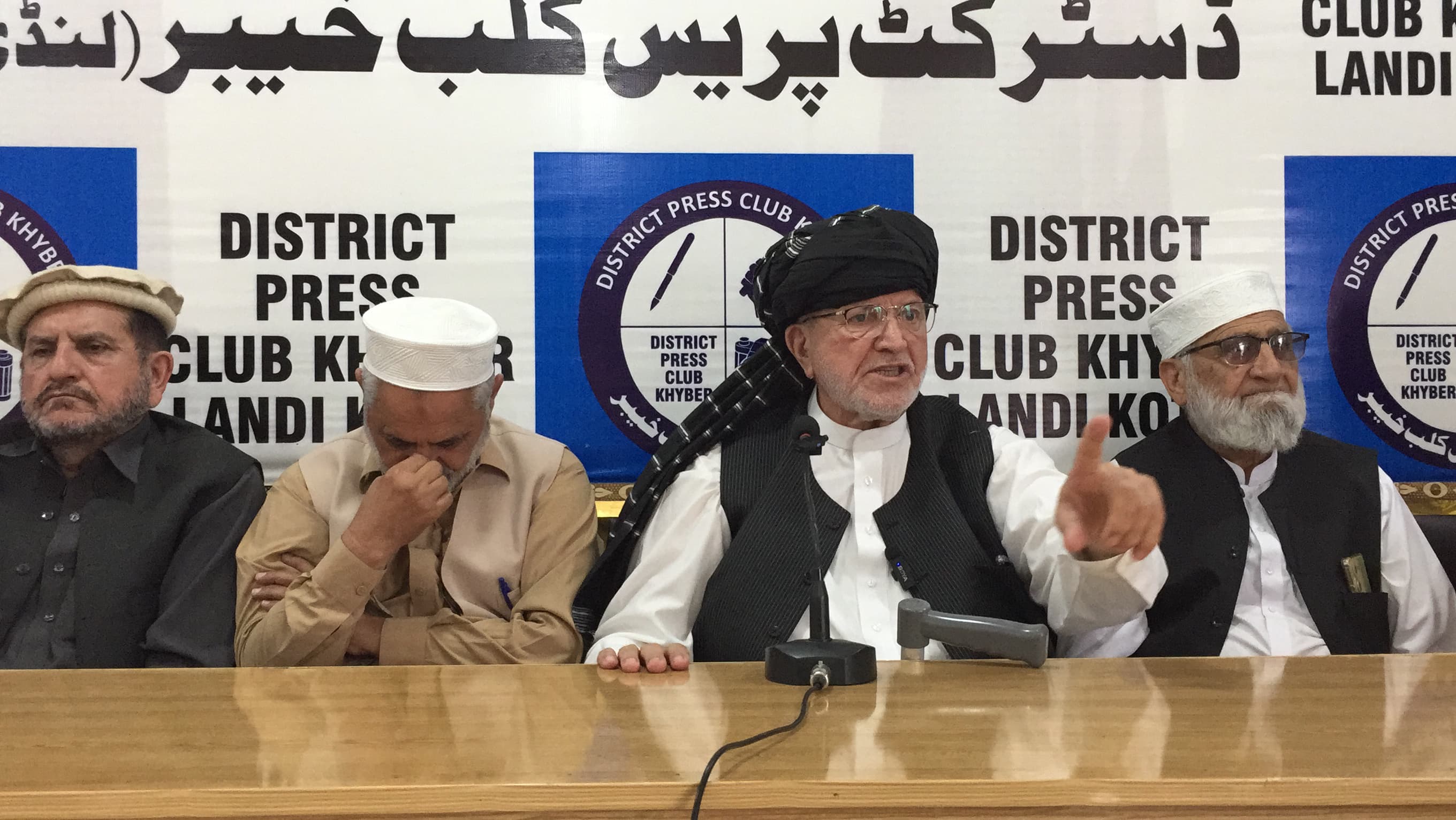
KHYBER: The FATA Grand Jirga has termed the merger of the erstwhile Federally Administered Tribal Areas (FATA) into Khyber Pakhtunkhwa a “forced and unilateral decision,” claiming it was carried out without the consent and consultation of tribal communities.
Speaking at a press conference at the District Press Club Khyber, Jirga Chairman Khan Marjan, President Malik Bismillah Khan Afridi, General Secretary Azam Khan Mehsud, Tahmash Shalmani and other leaders alleged that the 25th Constitutional Amendment undermined the historical, constitutional and social identity of the tribal people.
They claimed the merger was approved in haste under external pressure and the influence of powerful circles, adding that due constitutional procedures were ignored during the process.
The leaders said the tribal districts continue to face severe challenges in health, education, employment, justice and basic civic facilities. They added that the judicial system has also failed to provide timely justice to the people of the region.
They further alleged that cases related to the FATA merger have not been taken up in the constitutional court, creating unrest among the tribal population.
Also Read : Is Bannu Sliding Back Into Chaos? Rising Militancy, Blown Bridges & Market Blasts Raise Alarming Questions
The Jirga maintained that the tribal areas have a distinct historical and constitutional status, referring to agreements between tribal elders and the founder of Pakistan, Quaid-e-Azam Muhammad Ali Jinnah, which they said remain part of the official record.
The speakers said tribal communities have rendered immense sacrifices for Pakistan’s security and stability, yet continue to be deprived of basic rights.
The FATA Grand Jirga demanded urgent development measures in the tribal districts, calling for the establishment of a medical college in Landi Kotal as well as universities, nursing colleges and technical education centres in every tribal district to provide better educational and employment opportunities.
They also alleged that one of the objectives of the merger was to gain control over the mineral resources of tribal areas, which they said has adversely affected local rights. They warned that the abolition of traditional tribal customs and systems has increased social disputes and enmities, posing risks to regional peace.
The Jirga leaders said their constitutional and legal struggle against the merger would continue, and they would not end their movement until the restoration of tribal rights. They added that if justice was not provided by national courts, they reserved the right to approach international forums.
Meanwhile, General Secretary Azam Khan Mehsud announced that May 31 would be observed as a “Black Day,” with protest press conferences, public awareness campaigns and other programmes planned to highlight their stance.



.jpeg)
Comments
No comments yet. Be the first 🙂