


Pakistan, like many other countries, is grappling with the severe impacts of climate change and environmental degradation, resulting in unpredictable weather patterns.
From record-breaking heatwaves to unusual rainfall, devastating floods, and accelerated glacial melting, the effects are increasingly catastrophic.
In Khyber Pakhtunkhwa, recent torrential rains and floods have been attributed to cloudbursts, a phenomenon where clouds release an extreme amount of rain in a very short time. But is this a new kind of disaster?
Deadly Year for Rain Disasters
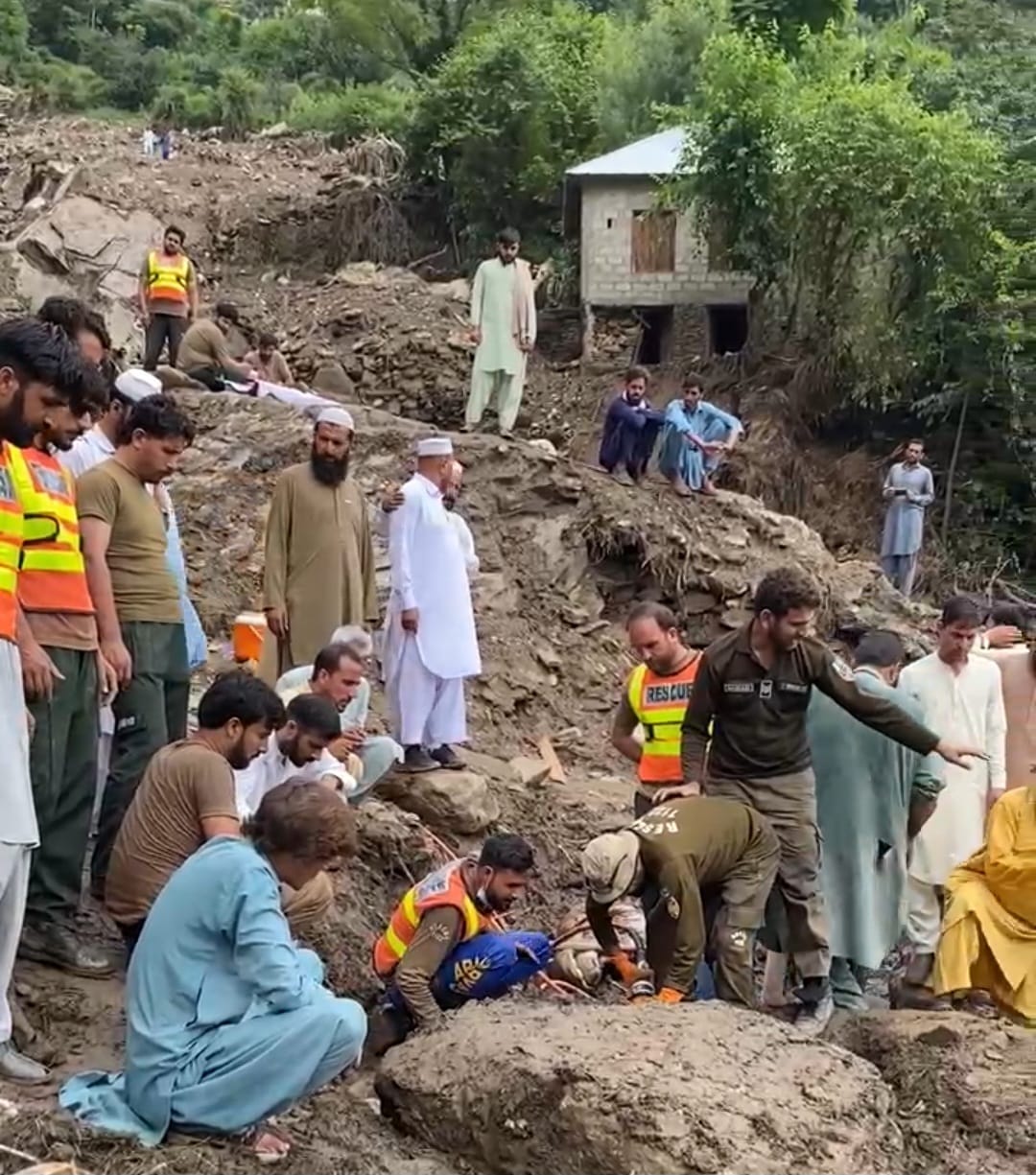
The year 2025 has witnessed multiple incidents of heavy rainfall and flash floods linked to lightning strikes and cloudbursts, particularly in Buner, Babusar Top, Naran, Swat, and Bajaur. Several other regions have reported similar events, but these locations experienced the most destruction. Hundreds of people lost their lives in these disasters. Among them, Buner faced the most severe devastation caused by a recent cloudburst.
According to the latest report by the Provincial Disaster Management Authority (PDMA), torrential rains and flash floods have caused widespread destruction across the province. So far, 385 people have lost their lives and 182 have been injured in various rain-related incidents.
Also Read: Conjunctivitis Outbreak Sweeps Malakand, Over 1,600 Cases Reported in Batkhela
Among the deceased are 299 men, 52 women, and 34 children, while the injured include 145 men, 27 women, and 10 children. The PDMA report highlights that Buner remains the worst-hit district, recording 228 deaths so far, while Swabi has reported 41 fatalities.
What is a Cloudburst, and Why Are They Increasing?
A critical question arises: what causes cloudbursts, and how can they be mitigated? Can there be an alert system to warn people in advance? It’s important to note that sudden floods are not always caused by cloudbursts alone; glacial lake outbursts can also trigger massive flooding.
Explaining the phenomenon, Professor Dr. Muhammad Nafees from the Department of Environmental Sciences at the University of Peshawar said that when rainfall exceeds 100 millimeters per hour over an area of 20 to 30 square kilometers, it is classified as a cloudburst. He added that glacier bursts are another source of flash floods.
Cloudbursts usually occur in cumulonimbus clouds, dense, towering clouds that resemble mountains and can rise between 1,000 to 3,000 meters in height. These clouds require high moisture content and typically form in the summer season, especially during the monsoon. Climate change has a strong connection to their formation.
While cumulonimbus clouds forming over Pakistan’s mountainous regions is not new, particularly in the Himalayas, the intensity has significantly increased since 2022, which experts link directly to climate change. Rising temperatures increase atmospheric moisture, which, in turn, raises the likelihood of cloudbursts.
Why Are Cloudbursts Hard to Predict?
Predicting a cloudburst is not impossible but extremely difficult. This is because the conditions for a cloudburst occur in a very small area, often just 10 kilometers across, making it hard for satellites to detect. Additionally, the process happens rapidly, leaving little time for forecasting.
Dr. Nafees explained the mechanics: clouds move upward at high speed, preventing raindrops from falling. When this upward movement slows or stops, all the accumulated water suddenly falls to the ground in a torrential downpour, appearing like a waterfall from the sky—“as if someone opened multiple taps at once.”
The Devastating Impact
Professor Nafees highlighted that the first and most severe impact is the sudden influx of massive amounts of water, which triggers flash floods.
This is particularly dangerous in mountainous regions where steep slopes accelerate water flow, increasing the risk of landslides. Landslides further complicate matters by adding soil, sand, and rocks to the water, making it heavier and more destructive.
Another concerning factor is the melting of glaciers, which is directly linked to climate change. When a glacier or glacial lake bursts, large boulders and debris are released, significantly increasing the damage potential.
When these enormous volumes of water enter rivers, they cause severe soil erosion, destroying crops and reducing agricultural productivity for years, posing a serious threat to food security.
Can We Prevent It?
Dr. Nafees pointed out that cloudbursts are a natural phenomenon beyond human control, but their frequency is rising due to climate change. In fact, based on 2022 projections, the intensity of floods in Pakistan could increase by 300% to 500%—a dramatic rise from the previous estimate of just 30%. This is an alarming forecast that demands urgent attention.
What can be done?
Avoid building homes near water channels: The government recommends keeping at least 200 feet away, but in practice, settlements often extend well beyond 500 feet, increasing vulnerability.
Map high-risk zones: Although precise forecasting is difficult, identifying areas where such incidents occur can help in planning evacuation routes and safety measures during the monsoon season.
Life jackets at home: Particularly for children and women in vulnerable areas, life jackets should be readily available during the rainy season.
Reforest mountain slopes: Lack of vegetation accelerates landslides, making floods deadlier.
Community awareness and emergency training: Educating locals on what to do before, during, and after a cloudburst is essential to reduce panic and ensure a swift, safe response.
Cloudbursts may be beyond our control, but preparedness, early awareness, and strict implementation of safety measures can significantly reduce the devastation they cause.





.jpeg)
Comments
No comments yet. Be the first 🙂