


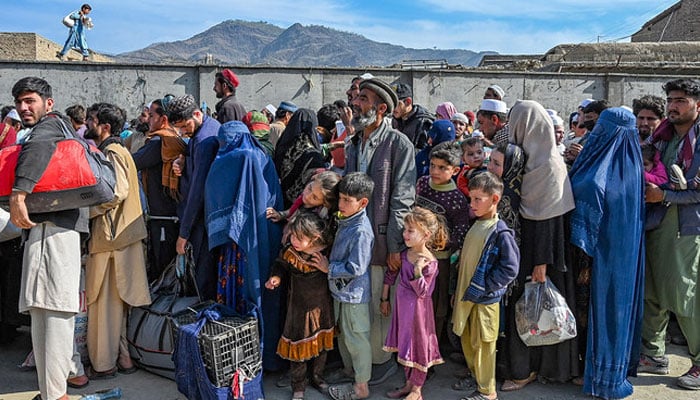
The Government of Pakistan has directed Afghan refugees to return to their homeland, and Afghan refugees residing in different cities and camps across Pakistan have been returning to Afghanistan at various times and in different seasons. Sometimes in extreme heat, sometimes during the holy month of Ramadan, and now in severe cold, this process has continued. At every stage, Afghan refugees have faced different hardships.
It is unfortunate that whenever the return of Afghan refugees is announced, public-level controversy, hatred, and the use of harsh language on social media begin. Verbal abuse and blame from both sides, instead of solving problems, only add to the suffering of Afghan refugees.
Like many Afghan refugees, I too have questions and grievances that need to be discussed, because silence only makes problems more complex.
One major grievance of Afghan refugees is that at the time of return, when they are forced to sell their homes, vehicles, and household belongings, many people take advantage of their helplessness. Items are bought at extremely low prices, and sometimes they are even mocked, which is a painful and inhumane attitude.
Another grievance is that many Afghan refugees do not have any personal homes or property in Afghanistan. Due to severe cold and limited facilities, they demand that they be given some time so they can arrange accommodation. With millions of Afghan refugees returning at the same time, this issue becomes even more serious: if they leave from here, where will they go?
The third and most painful aspect is that Afghan refugees have spent nearly forty years in Pakistan. Their children were born here, received education, grew up, formed relationships, and many have buried their loved ones in this land. In such circumstances, sudden separation is not easy—especially when both sides share the same culture and bonds of joy and sorrow.
It is a fact that such decisions are part of state policy, and every country has the authority to make them. However, spreading hatred at the public level is not a solution. It neither changes policies nor reduces ground realities.
Afghan refugees worked hard to build their lives in Pakistan. If they are selling their belongings at the time of return, they should be treated with kindness. Buying their items at fair prices and bidding them farewell with respect is a requirement of human and Islamic values, because many Afghan refugees consider Pakistan their home.
Scenes can also be seen in Afghan camps where Afghan refugees and Pakistani citizens embrace each other, sharing the pain of farewell and separation. These scenes remind us that the real problem is not hatred, but circumstances.
I believe the government should make the process of Afghan refugees’ return gradual: the return should be phased, people from cold regions should be given additional time, and humanitarian considerations should be given central importance in decision-making.
I appeal to the public not to exploit Afghan refugees and not to target any nation, ethnicity, or country on social media. Disagreement is possible; hatred is not. International organizations should also play their role in providing basic facilities in Afghanistan.
This is not a time for blame. Afghan refugees are not enemies, nor are people at the public level heartless. We must understand one another and face this difficult phase with patience and resilience.

.jpeg)
1 Comments
verfiy pti lincense police kpk verfiy gov policys