


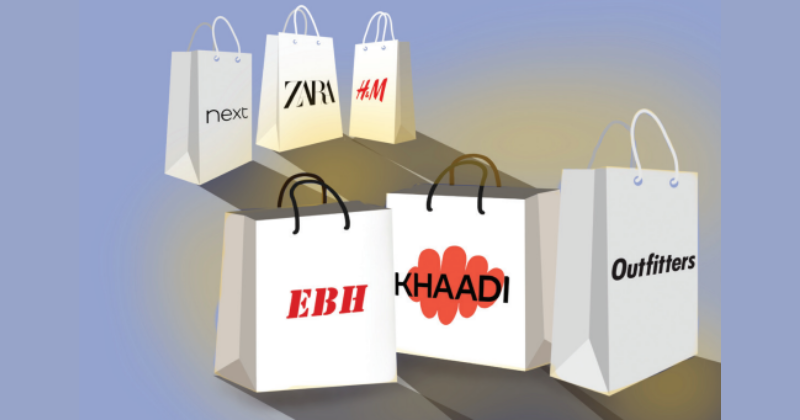
A few days ago, I overheard a conversation at a shoe store that, within moments, raised a significant question. After making a purchase, a woman asked while taking a shopping bag:
“Am I being charged for this bag as well?”
The salesman replied briefly but clearly:
“Yes, absolutely.”
Hearing this, the woman said with slight surprise:
“Then why should I take this bag? On one hand, I pay for it, and on the other, I promote your brand? If you’re giving it, then give it for free—otherwise, I don’t need it.”
This may seem like an ordinary exchange, but in reality, it raises an important issue related to consumer rights and market behavior—one that requires serious consideration.
In today’s era, purchasing branded products has become a norm.
Consumers choose well-known brands expecting better quality, reasonable prices, and reliable service. However, in practice, this experience does not always meet expectations. At times, consumers face hidden or unnoticed additional charges, which can collectively turn into a noticeable financial burden.
Also Read : The Hidden Cost of Going Viral: Why Social Media Users Must Respect Privacy
During purchases at branded stores, logo-printed shopping bags are usually provided. While they appear to be a part of convenience or better presentation, the reality is that customers are often charged an additional 20 to 50 rupees for them. The fundamental question here is whether this is truly a service or simply an indirect means of brand promotion.
When a customer is seen carrying such a bag in public, they are essentially advertising the brand. Interestingly, the customer is also paying for this act of promotion, which reflects an imbalanced commercial practice.
Similarly, a specific psychological pricing strategy is used in setting prices. Numbers like 2990, 3299, or 4995 are used to make prices appear lower, even though the actual difference is minimal. While this may be considered a marketing tactic, its effects on consumer decision-making are significant.
Another aspect of this issue is equally important. Often, when a customer pays 3000 rupees for a purchase of 2995, the remaining 5 rupees are not returned, with the excuse that “change is not available.”
Although this amount seems negligible, when this practice is repeated across many customers daily, it accumulates into a substantial sum, effectively becoming additional profit.
This situation also highlights an important legal aspect. In Pakistan, there are clear laws for the protection of consumer rights, which require full payment transparency and clear disclosure of all additional charges. However, effective implementation of these laws is often lacking, leaving consumers deprived of their basic rights.
In this context, the most important role is that of the consumer. An aware and informed consumer can not only protect their own rights but also contribute to positive changes in overall market practices.
Demanding the correct change during purchases, questioning unnecessary charges, and raising awareness about such practices are essential steps.
For a balanced and fair commercial system, both brands and consumers must fulfill their responsibilities. Brands should promote transparency, honesty, and consumer-friendly policies, while consumers should stay informed and raise their voices for their rights—because an aware consumer is the foundation of a just and responsible society.
Note: This article reflects the personal opinion of the author and does not necessarily represent the views of the organization. Cultural Heritage



.jpeg)


Comments
No comments yet. Be the first 🙂