


Social media in Pakistan has created an environment around every individual where even expressing a personal preference or dislike can trigger an immediate backlash.
People, instead of understanding the context, often label such statements as biased, hateful, or controversial. The ability to tolerate differing opinions seems to be rapidly disappearing from our society.
In recent years, the number of restaurants, cafés, and hotels in Dera Ismail Khan has increased significantly. Most of these places serve Chinese cuisine, and the cooks for these dishes are usually brought from Punjab.
One possible reason is that people enjoy eating Chinese food but consider preparing it themselves difficult. However, nobody ever questions why cooks are only brought from Punjab.
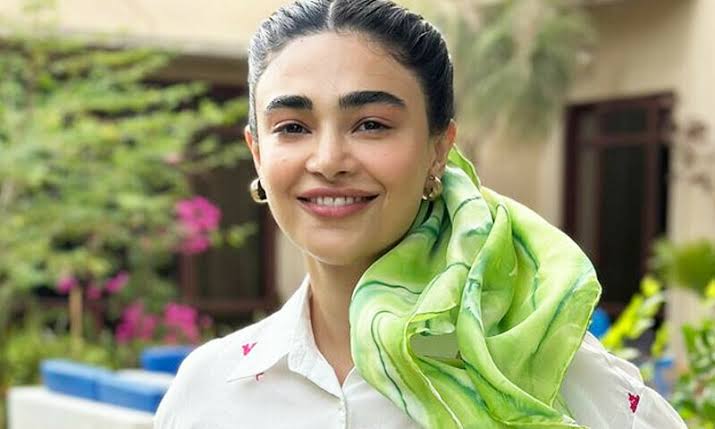
Recently, a video of Pakistani actress and model Sahifa Jabbar Khattak went viral on social media. In it, she expresses doubt about new applicants, unsure which “fancy” establishment they are applying for.
Also Read : Between Faith and Health: The Rising Trend of Period-Delaying Pills in Ramadan
According to her, she wants workers with clean intentions who take their work seriously. She also mentioned that she specifically prefers Pashtun men this time, as she believes they are usually reliable, while she no longer trusts Punjabi or Urdu-speaking applicants as before.
She said she needs good, hardworking staff and helpers for the kitchen who can responsibly handle cutting, dicing, and other tasks.
I do not support her statement, as it is sensitive and open to disagreement. However, it can be acknowledged as her personal choice or experience. The problem arises when some in society are just waiting for someone to express an opinion so they can immediately label it as bias or hatred.
This is exactly what happened. The frenzy of social media descended. Some suggested she should open a restaurant in Peshawar. Others called for a boycott. One person even emotionally questioned whether hospitable Pashtuns would allow Punjabi men or women to start their businesses in Bajaur or Waziristan. This reaction is surprising, but the ground reality is quite different.
These are tribal districts where Sikhs, Hindus, Christians, and Muslims have lived together for years. When development projects were launched, laborers from distant Punjab areas came for work. Even today, tourists from different parts of Pakistan are welcomed not just as visitors but as guests.
In recent years, many female bikers have traveled to these regions and praised the hospitality, culture, and attitudes of the people. Respecting guests here is not just tradition; it is a deeply rooted social value.
These tribal districts of Khyber Pakhtunkhwa have repeatedly been affected by terrorism. The people here have witnessed unimaginable hardships. There were neither adequate educational resources nor basic facilities.
Children saw their parents killed amidst falling bombs and missiles. They heard the roar of drone attacks and witnessed attacks on schools and madrasas where innocent children were martyred. Some lost limbs in landmine explosions, some lost parts of their bodies.
These people were forced to leave their homes, lands, and businesses to save their lives, relocating to Punjab and other areas. Yet wherever they settled, they worked hard and tried to rebuild their lives.
In this context, it’s important to remember that Khyber Pakhtunkhwa has always been home to people of different ethnicities and religions. Sikhs, Hindus, and Christians have lived here for years, while people from other regions of Pakistan have conducted business and worked here. This diversity enriches the region’s culture.
In her video, Sahifa Jabbar Khattak expressed trust in Pashtuns but also emphasized that she wants honest and hardworking staff. The reality is that any business owner wants trustworthy people, regardless of their color, ethnicity, nationality, or faith.
In markets, most helpers are neither relatives nor from the same tribe or neighborhood. They are simply people the owners trust.
Unfortunately, when one person betrays us, sometimes we end up seeing that betrayal as representative of the whole community. Perhaps our thinking has been shaped this way. That is why sometimes all Pashtuns are portrayed as terrorists, sometimes as naive, and sometimes limited to cooking or fighting roles.
If a drama shows a war scene, it is immediately linked to Waziristan. If a character is made a servant, they are given a Pakol cap and called “Gul Khan.” These are the stereotypes we have grown up seeing in media. Sadly, the whole nation never raised its voice against this because it was always considered an issue confined to a specific group.
Since childhood, I have loved reading newspapers, though my household did not subscribe. I sometimes picked up papers from neighbors or found old newspapers at my grandparents’ house.
Once, I read a column that still stays with me: it mentioned that no one there identified as Pakistani.
It was the story of a foreign tourist in Pakistan. When he asked people who they were, one said “Pashtun,” another “Punjabi,” another “Sindhi,” another “Baloch,” but hardly anyone said, “I am Pakistani.”
Even today, our struggle is not just to be Pakistani, but to prove that we are Pashtun, Punjabi, Sindhi, or Baloch.
We need to understand that one person’s opinion does not represent an entire nation. When an individual speaks, it should remain confined to that individual, and should not be used to build walls of hatred between nations or languages.
Because when every opinion in society is painted as biased, dialogue ends—and when dialogue ends, only hatred remains.
.jpeg)
Comments
No comments yet. Be the first 🙂