


In February 2026, the United States and Israel struck Iran, killing its Supreme Leader. Iran retaliated with missiles targeting Saudi Arabia, Kuwait, the UAE, Bahrain, Iraq, and Jordan. Muslim-majority governments across the region coordinated with Washington, opened their airspace to American warplanes, and issued no statements in solidarity with a fellow Muslim state under attack.
Weeks earlier, Pakistani and Afghan forces had exchanged fire across the Durand Line, killing each other’s soldiers. Both nations are Muslim-majority, both governed by Islamic law.
The Organization of Islamic Cooperation issued statements about these crises. Nothing changed. For anyone studying Muslim political history, the real question is not why these events happen—it is why anyone expected otherwise.
Also Read : Echoes of Shelling Drive Thousands From Homes Along the Pakistan–Afghanistan Border
The concept of the Ummah—a global Muslim community bound by shared faith and collective interest—is among the most powerful ideas in human civilization. Yet as a political proposition, it is among the most consistently contradicted by the behavior of Muslim states across fourteen centuries.
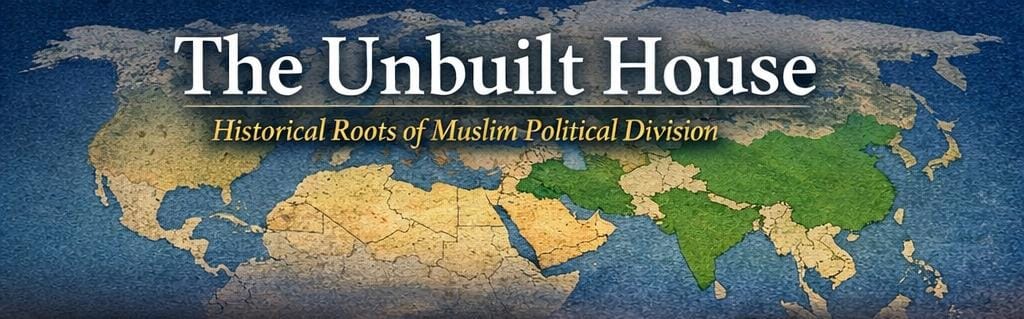
From the first succession crisis in Medina to missile exchanges in 2026, the historical record is not one of unity betrayed; it is one of a unity that was never structurally built.
Muslim political life has always been dominated by states, dynasties, and rulers pursuing the same objectives that all political entities pursue: territory, revenue, security, and power. Faith provided the vocabulary; power provided the logic.
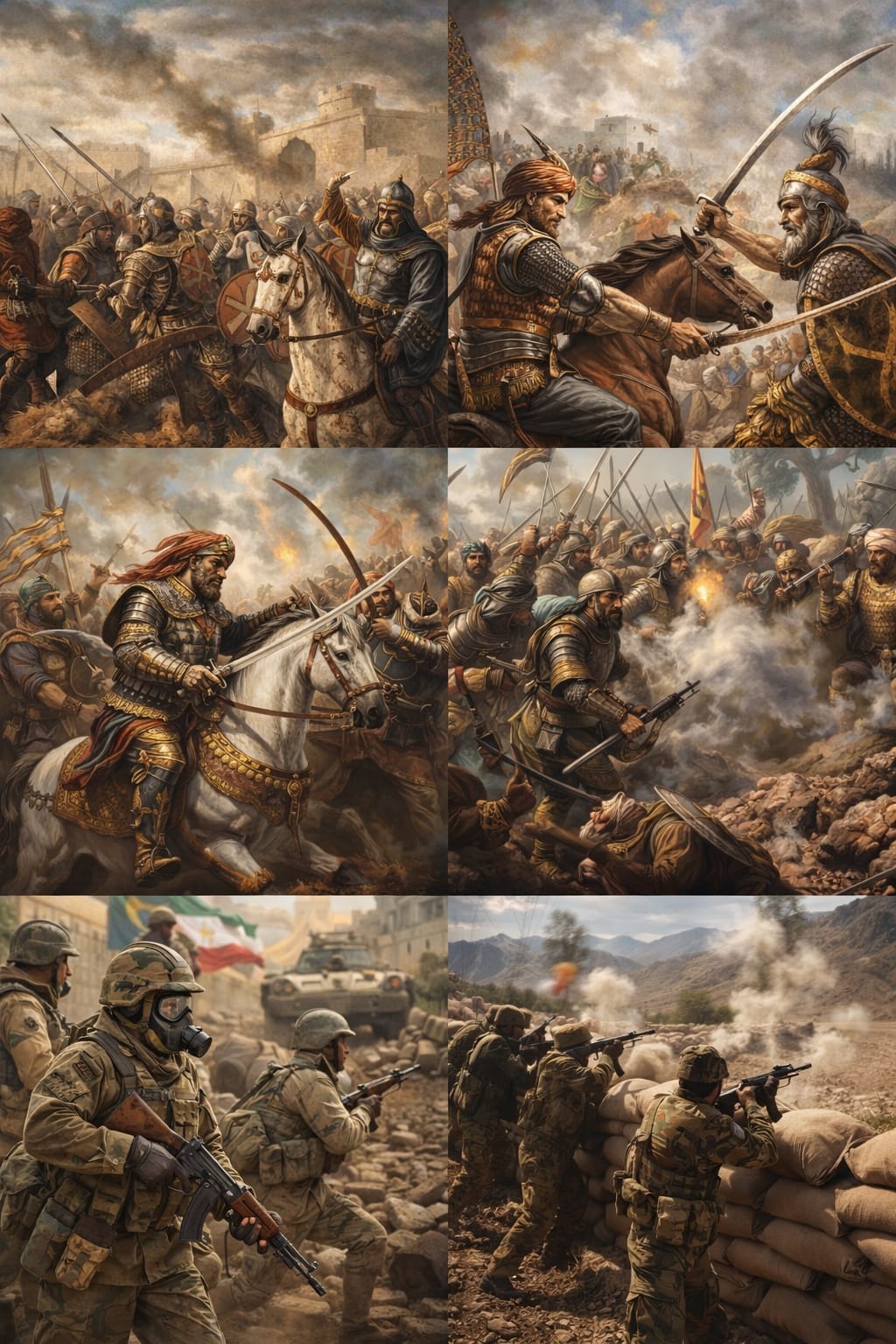
The fracture began within hours of the Prophet Muhammad’s (Peace Be Upon Him) death in 632 CE. At Saqifah Bani Sa’idah in Medina, a gathering erupted over succession.
Leadership was decided through tribal negotiation and political assertion rather than divine consensus, as recorded in Ibn Hisham’s Al-Sirah al-Nabawiyyah and al-Tabari’s Tarikh al-Rusul wa al-Muluk.
The civil war that followed (656–661 CE) between Caliph Ali ibn Abi Talib (RA) and Muawiyah ibn Abi Sufyan was fought over governance, not theology.
The Umayyad Caliphate institutionalized Arab ethnic privilege over non-Arab converts. From the earliest decades, Muslim political life was guided by power more than piety.
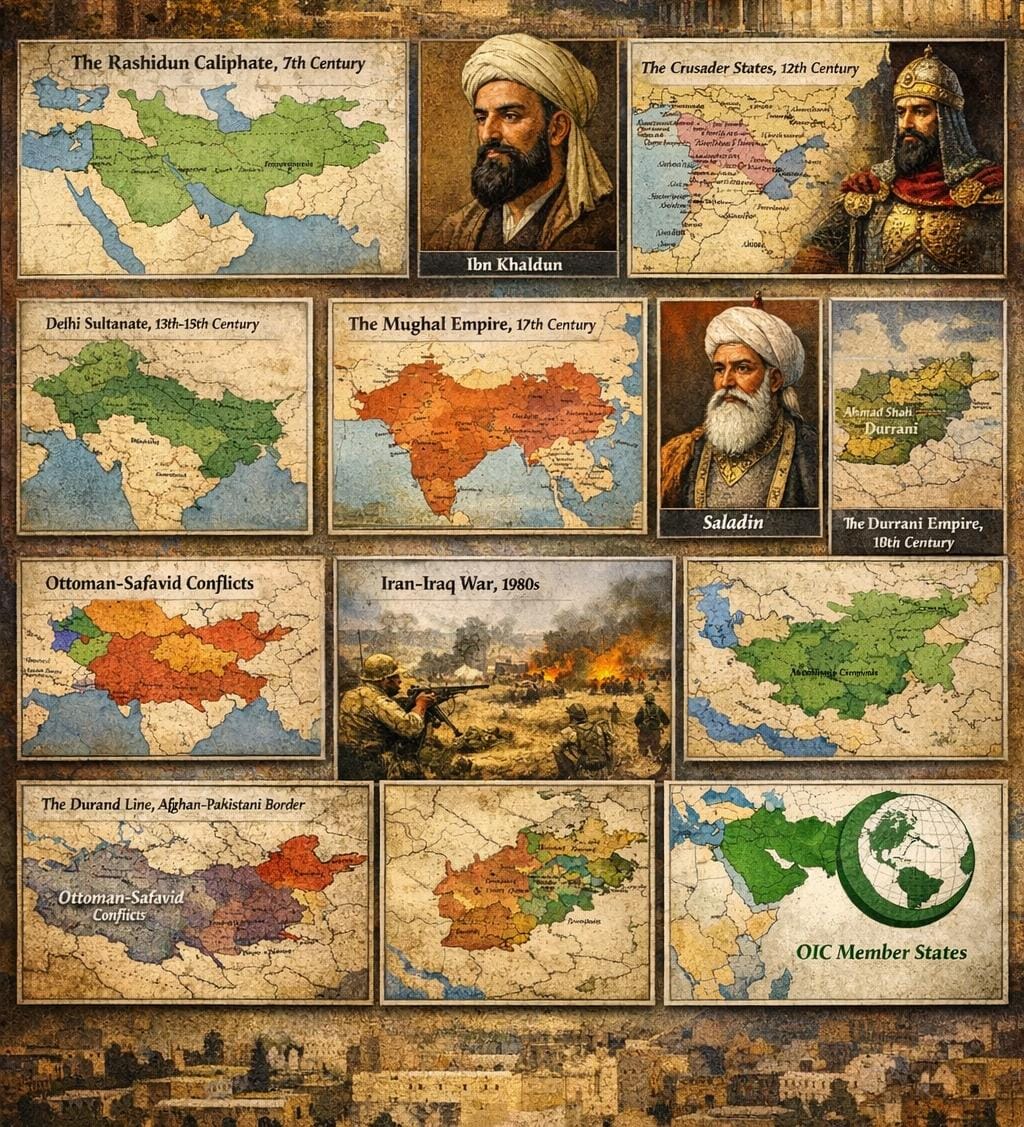
Ibn Khaldun, the fourteenth-century historian, diagnosed this candidly. Political history is driven not by faith but by asabiyyah—tribal and ethnic solidarity. Dynasties rise on its strength and collapse when it erodes.
The Abbasid revolution of 750 CE was a Persian-backed transfer of imperial power, framed as religious justice. The Crusades (1096–1291 CE) further illustrate the principle. The Fatimid Caliphate of Egypt negotiated independently with Crusaders, treating them as counterweights against rival Muslim powers, as Ibn al-Qalanisi documents.
When Saladin reconquered Jerusalem in 1187 CE, he first subdued fellow Muslim states, abolishing the Fatimid Caliphate in 1171 CE and campaigning against the Muslim princes of Mosul and Aleppo. Muslim unity, when achieved, was unity by conquest. The Ummah did not act collectively; one ruler forced others to comply.
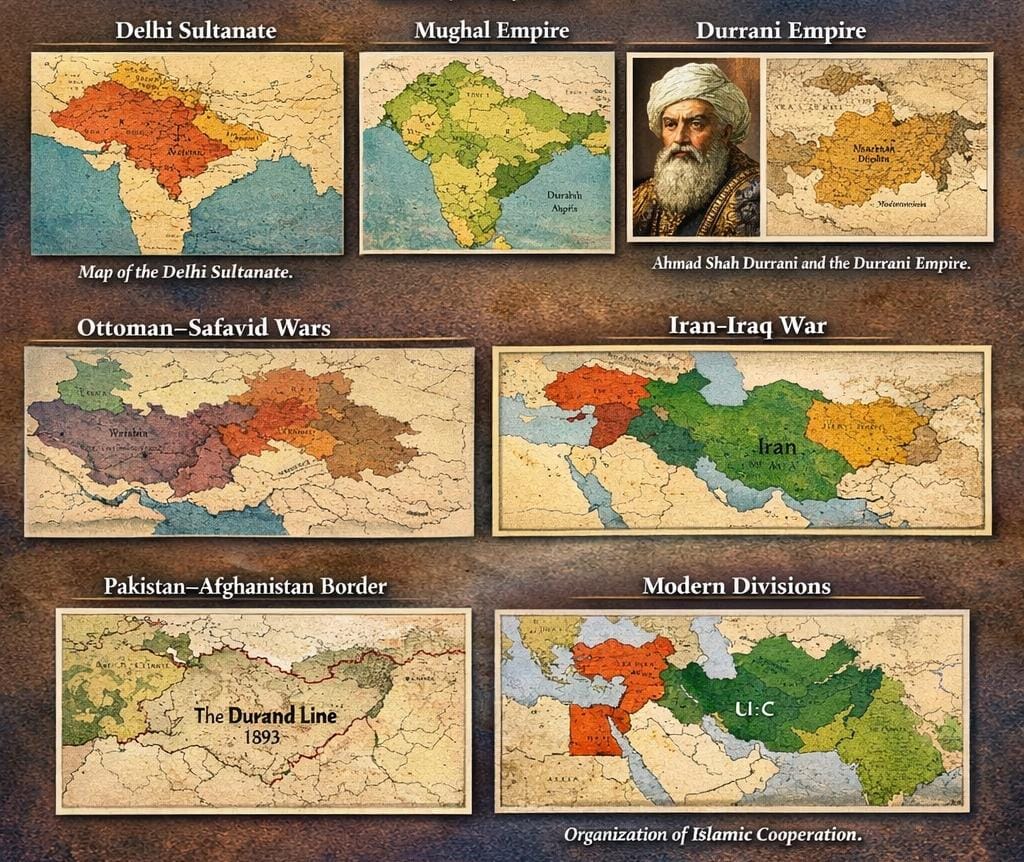
The Indian Subcontinent highlights the gap between Islamic rhetoric and political reality. The Delhi Sultanate (1206–1526 CE) was a succession of competing Turkish and Afghan dynasties—the Mamluks, Khaljis, Tughlaqs, Sayyids, and Lodis—each rising by overthrowing or assassinating its Muslim predecessor.
Ziauddin Barani’s Tarikh-i-Firuz Shahi documents court intrigues, noble rebellions, and fratricidal wars. When Timur invaded India in 1398 CE, he massacred Muslim subjects under a Muslim sultan—faith offered no protection. Political power dictated outcomes.
The Mughal Empire (1526–1857 CE) followed the same pattern. Babur defeated the last Lodi sultan at Panipat, recording his campaigns against Afghan Muslim chiefs, Hindu kings, and rebellious Muslim nobles with equal strategic calculation in the Baburnama. Mughal succession crises were chronic.
Humayun was expelled by the Afghan Muslim ruler Sher Shah Suri. Akbar spent years suppressing Muslim rebellions by his nobles and Afghan chiefs. Aurangzeb imprisoned his father Shah Jahan and executed his brothers, all Muslims, in dynastic wars. Islamic governance provided the framework, but dynastic realpolitik determined behavior.
Afghanistan’s history illustrates the same structural logic. Afghan tribal confederacies—Pashtun, Tajik, Hazara, Uzbek—fought consistently across centuries despite shared faith. Ahmad Shah Durrani’s eighteenth-century empire emerged as much from campaigns against rival Muslim tribes as from external conquest.
Stanley Wolpert and Mountstuart Elphinstone document centuries of intra-Muslim tribal rivalry filling the vacuum left by weak state institutions. This is not a cultural flaw; it is structural: where institutions are weak, tribal solidarity dominates, as Ibn Khaldun predicted.
Modern Pakistan-Afghanistan relations inherit this pattern. Both are Islamic republics, both governed by constitutions rooted in Islam, and both have large populations with familial and cultural ties across the Durand Line.
Yet for decades, the relationship has been defined by proxy wars, border clashes, and mutual accusations of terrorism. Pakistan supported the Taliban in the 1990s; the Taliban refused to recognize the Durand Line and harbored groups attacking Pakistan.
Pakistani forces and the TTP clashed repeatedly from Afghan soil. Direct fire exchanges occurred in 2022, 2023, and 2025. Despite shared faith, political and territorial interests dictated conflict. Ibn Khaldun would not have been surprised.
The Ottoman-Safavid Wars (1514–1639 CE) established the template earlier. These wars, fought over territory, trade, and dominance, killed hundreds of thousands.
The Treaty of Zuhab (1639) drew the modern Iraq-Iran border through power, not Islamic scholarship. The Iran-Iraq War (1980–1988) echoed the geography with modern weapons.
Saudi Arabia and Gulf states financed Saddam Hussein; oil and geopolitics drove the conflict that killed approximately one million Muslims. Religion mobilized soldiers; material interests funded war.
Palestine follows the same pattern. In 1948, Jordan secretly negotiated with the Jewish Agency to annex the West Bank. In 1967, Egypt, Syria, and Jordan entered with uncoordinated strategies.
Egypt’s peace with Israel (1979), Jordan’s normalization (1994), and the Abraham Accords (2020) occurred without Palestinian consent. Arab armies issued statements but did not act when strategic interests diverged from their own state priorities.
The 2026 Iran strike confirms the argument. When Iran retaliated, Arab states aligned with Washington. The OIC issued communiqués. Pakistan stayed silent.
The Muslim world’s 57 sovereign states acted as sovereign states do, according to their own interests. Gulf wealth invested in Western markets ensured alignment with the West. This was not a betrayal of Islam but a predictable outcome of national interest.
From the Delhi Sultanate to the Durand Line to 2026, the conclusion is clear: Muslim political unity is not a lost inheritance waiting to be recovered; it is a project never built.
The Ummah exists as a spiritual community—real, enduring, and beyond challenge. But as a political alliance capable of sustained, collective action, it has only existed in fragments and for brief periods, usually through conquest or coercion.
Achieving true political unity would require shared economic institutions, enforceable collective security, and genuine political will to treat Muslim interests as common rather than rhetorical. Until then, Muslim disunity is not a crisis to be lamented; it is a structural condition to be understood.



.jpeg)
Comments
No comments yet. Be the first 🙂