


The Price of a Question: Alleged Assault in a Hospital:
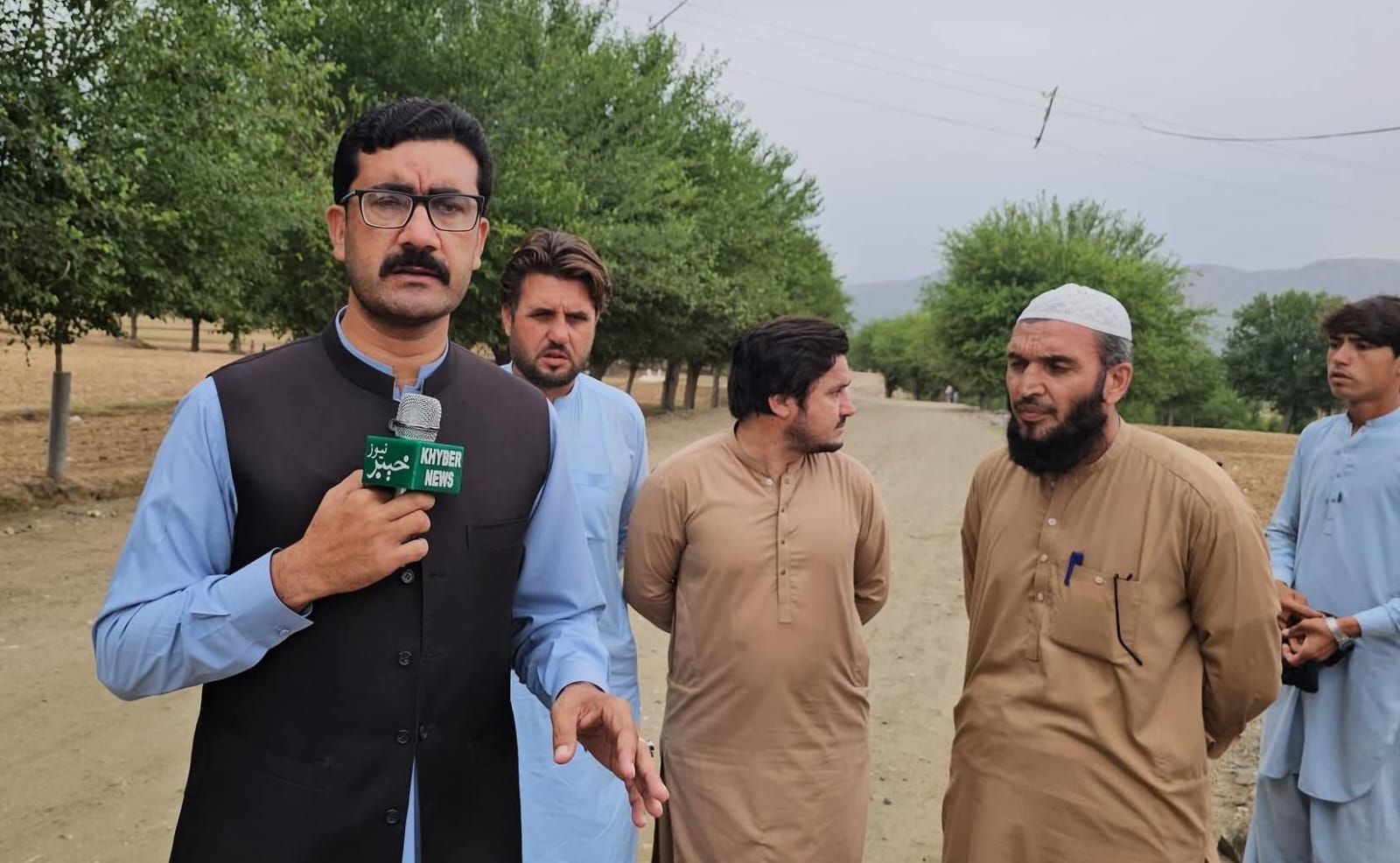
In November 2022, raising a question about funds allocated for ongoing construction work at a government hospital in Bajaur district led to serious consequences for a journalist. According to journalist Zahid Jan, he asked on social media about the total budget released for the construction project, which angered the hospital administration.
At the same time, the family of a deceased person was protesting at the hospital, claiming that a post-mortem was not being conducted. Zahid Jan was recording the family’s stance when, allegedly, the Medical Superintendent arrived, assaulted him, and snatched his mobile phone.
The administration accused the journalist of reporting from inside the mortuary, but Zahid Jan maintains that he was outside with the family members.
Also Read : KP’s Anti-Pollution Canal Law Fails to Deliver After 11 Years
Administrative Pressure and Barriers to Justice:
Following the incident, when journalists staged a protest, the hospital administration announced a strike. Zahid Jan says the police refused to register his FIR, and pressure was also exerted by the district administration.
“I was told that if journalists remained silent, no case would be registered against me. I was ultimately forced to reach a settlement.”
Journalism Forced into Silence:
Zahid Jan says the incident made him realize that neither the public, nor institutions, nor media organizations stand by journalists. “Now I report less on public issues because the price of speaking the truth is too high.” This situation is not limited to one journalist; many journalists in Bajaur and other tribal districts face similar pressures.
The Consequences of Sensitive Reporting:
Journalist Fazal Rahman has been working in Bajaur for the past eight years. He has reported on sensitive topics such as girls’ education, health, and so-called honor killings, which resulted in repeated threats against him.
He says that after publishing a story on an honor killing in 2021, he received death threats. “That was an extremely difficult time for me. I didn’t even tell my family. Later, local elders intervened and resolved the matter.”
Post-2007 Conditions and Ongoing Risks for Journalists:
According to Fazal Rahman, the region has remained tense since 2007. “Here, reporting is taken as a personal matter. Journalists are made to feel that their families are known.”
Women Journalists: Double Pressure of Security and Culture
In Khyber Pakhtunkhwa and the tribal districts, women journalists face far greater challenges than their male counterparts. Alongside security threats, cultural barriers pose significant obstacles. Some female journalists are forced to work without revealing their identities.
Why Are Women’s Voices Weak in Tribal Districts?
Journalist Khalida Niaz says the number of women journalists in tribal districts is extremely low. “In many areas, it is not possible for female journalists to go, and some women are not even allowed to write under their own names without family permission.”
According to her, women face fundamental issues such as education, health, and property rights, yet there are almost no female journalists to raise their voices.
Freedom Network Report: Khyber Pakhtunkhwa the Most Dangerous Province
According to a report by Freedom Network, an organization working for the protection of journalists’ rights, Khyber Pakhtunkhwa has been declared the most dangerous province in Pakistan for journalists, where they face attacks, arrests, censorship, and legal restrictions.
Statistics Highlighting the Risks:
Between May 2024 and April 2025, five journalists were killed across the country, two of whom belonged to Khyber Pakhtunkhwa. During the same period, at least 82 journalists and media workers faced various threats. In Khyber Pakhtunkhwa alone, 22 cases were registered against journalists.
The Gap Between Tribal and Urban Journalism:
According to Muhammad Asim, a member of the Bajaur Press Club, journalists in tribal districts work under immense pressure. “The tribal districts have merged into Khyber Pakhtunkhwa, but institutional attitudes still reflect the era of the Frontier Crimes Regulation (FCR). There is a clear difference between journalism in tribal districts and in Peshawar.”
Armed Groups, Corrupt Elements, and Free Press:
Hasbanullah, President of the Tribal Union of Journalists, says that journalists in tribal districts face armed groups on one side and corrupt elements on the other.
“Journalists are expected to report according to others’ wishes. Independent journalism is considered the biggest threat.”
According to Hasbanullah, in the current circumstances, journalists must prioritize their safety and avoid high-risk reporting.
.jpeg)
Comments
No comments yet. Be the first 🙂