


When I woke up this morning and looked out of my window, the snow-covered mountains of Pakistan’s Khyber region—stretching from Jamrud to Landikotal—offered a rare and striking sight. After several winters, the peaks surrounding Peshawar were once again wrapped in white. For many residents, it was a moment of quiet beauty.
That moment did not last long.
Almost immediately, my thoughts turned to thousands of internally displaced people (IDPs) from Tirah Valley who were exposed to the same snowfall—not as observers, but as victims. For them, the snow was not scenic. It was dangerous. It arrived at the worst possible time and highlighted a humanitarian crisis that was foreseeable, preventable, and rooted in human decisions rather than natural causes.
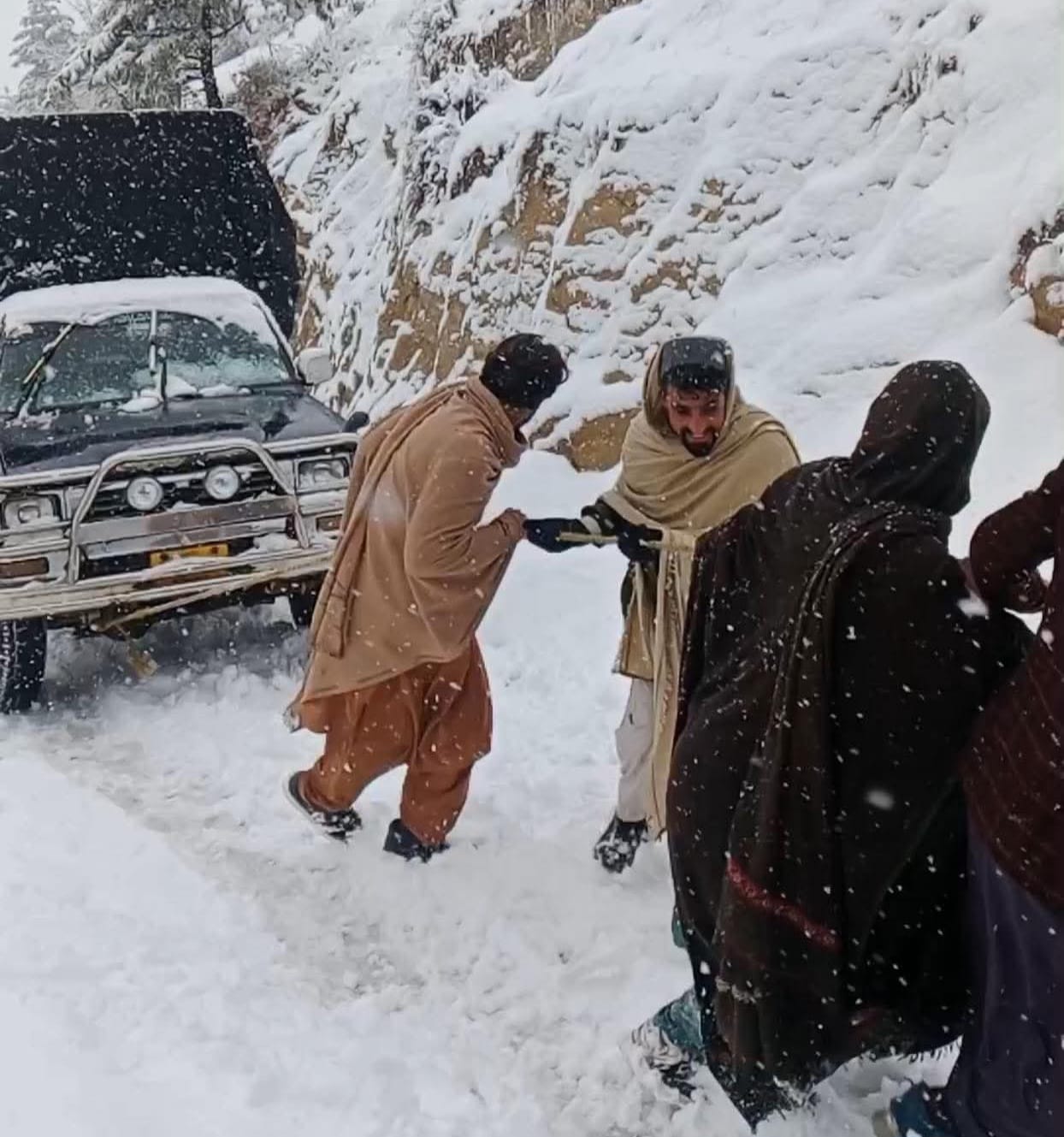
For more than 72 hours, thousands of families from Tirah Valley have remained stranded in areas including Dwa Toi, Tan, Maidan, and Mehrban Killi after being forced to evacuate their homes. Hundreds of vehicles—cars, trucks, and lorries—are stuck in long queues on both sides of Bara and Tirah, many barely moving a few kilometers since departure. Snowfall, worsening road conditions, and serious administrative failures at evacuation and registration points have pushed an already vulnerable population into a life-threatening situation.
Civilians Exposed to Extreme Winter Conditions:
The stranded convoys are overcrowded with children, women, elderly people, and the sick. As temperatures drop, families are sleeping inside vehicles or in the open without adequate food, clean water, heating, or medical care. Reports from the ground describe severe shortages of food and medicine, with children and elderly women particularly affected by cold-related illness, exhaustion, and trauma.
Despite the scale and urgency of the crisis, relief efforts remain slow, fragmented, and insufficient.
A Crisis of Decisions, Not Weather:
This emergency cannot be explained by snowfall alone. It is the direct result of poor planning and weak coordination between civilian authorities and the military.
The timing of the evacuation raises serious concerns. Historically, winter in Tirah Valley sees reduced militant activity and limited military operations due to harsh weather and difficult terrain. Armed groups and security forces alike typically scale down movement during this period. If evacuation was unavoidable, it could—and should—have been planned for safer seasons, either during summer, when security incidents reportedly increased, or in spring, when roads are accessible and emergency preparedness feasible.
Instead, families were forced to leave during peak winter without adequate transport planning, shelter arrangements, or contingency measures. The resulting suffering was not accidental. It was predictable.
Deadly Roads and Unclear Casualties:
The mountain roads of Tirah Valley are dangerous even in normal conditions. Over the past several days, multiple vehicles have reportedly slipped on snow-covered roads and fallen into deep gorges, resulting in deaths and injuries. While official casualty figures remain unclear, local accounts confirm multiple fatal incidents.
Official statements citing the rescue of a limited number of individuals fail to reflect the reality on the ground. Thousands remain stranded, and each hour of delay increases the risk of further loss of life.
What Must Be Done—Immediately:
Preventing a catastrophe requires urgent and extraordinary measures:
• Aerial evacuation of children, elderly people, women, and the seriously ill
• Deployment of military engineering units and heavy machinery to clear snow-blocked roads
• Establishment of emergency relief points providing food, winter supplies, and medical care
• Opening of alternative exit routes, including Arhanga and Haider Kandaw, to reduce pressure on the single Dwa Toi corridor
Forcing thousands of civilians through one narrow exit point during extreme weather created a predictable and dangerous bottleneck. Responsibility for this failure is shared between civil authorities and the military.
Displacement Does Not End at the Checkpoint:
For those who have reached Bara or Peshawar, displacement has not brought safety. Many families are sheltering with relatives in overcrowded homes; others face severe shortages of affordable rental housing. Government assistance has largely been limited to transport costs and modest monthly stipends.
This is insufficient. Shelter, winter protection, healthcare, and dignity are not optional forms of aid—they are basic obligations, particularly when displacement is state-directed.
Beyond immediate relief, authorities must also ensure that any future return to Tirah Valley is voluntary, safe, and dignified, in line with international standards. Repeated displacement without security guarantees, rehabilitation, and livelihood support only deepens long-term instability and resentment.
A Test of Responsibility and Rights:
Displacement carried out in the name of national security carries legal and moral responsibilities under both domestic law and international humanitarian principles. While counter-militancy operations may be legitimate, they do not absolve authorities of their duty to protect civilians repeatedly forced from their homes.
The military maintains significant logistical capacity in Tirah Valley. Civil authorities retain responsibility for planning, coordination, transparency, and civilian protection. This crisis was anticipated. What was missing was preparedness—and accountability.
A Call for Urgent Action:
Without immediate intervention, this situation risks becoming a large-scale humanitarian tragedy. The people of Tirah do not need political statements or symbolic gestures. They need roads cleared, shelters provided, food and medicine delivered, and lives protected—now.
Snowfall is natural.
This crisis is not.
It is a test of governance, coordination, and respect for human life—and so far, that test is being dangerously failed.
This is a moment for action, not statements.
For coordination, not blame.
And above all, for compassion.
Have mercy on the people of Tirah.
Do not play with their suffering through political rhetoric.
Help them meet their basic needs—and ensure their safe, voluntary, and dignified return—before it is too late.

.jpeg)
Comments
No comments yet. Be the first 🙂