


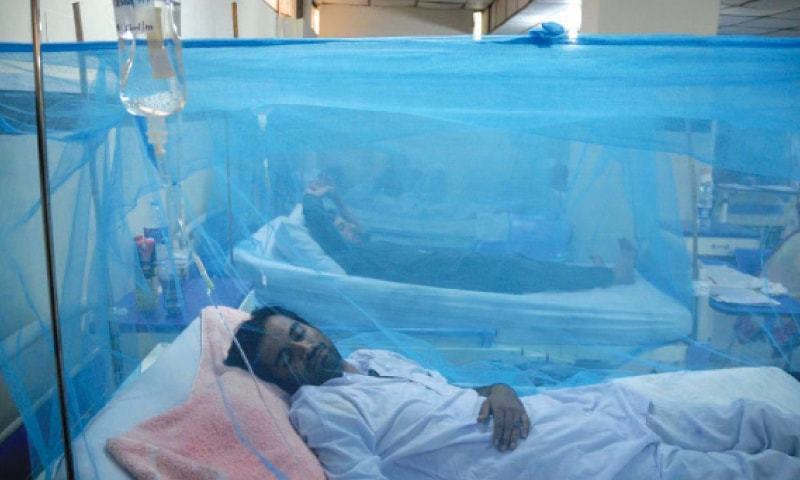
Peshawar’s 38-year-old Muhammad Hanif, who works as a manager at a petrol pump, recently contracted the dengue virus. Hanif said he had been suffering from fever and severe body pain for two days before visiting a doctor, who gave him injections and prescribed some medicines. However, as his fever persisted, further medical tests revealed that he was dengue positive.
Following his diagnosis, the doctor advised rest and medication. Hanif took complete rest for a week and continued taking paracetamol, after which his platelet count gradually improved, and his health stabilized. He shared that although he has now fully recovered, he lost about 10 kilograms during the illness.
Like Hanif, many dengue patients across Khyber Pakhtunkhwa report post-recovery issues, including weight loss, weakness, and general fatigue.
According to medical experts, the current weather, marked by high humidity, monsoon rains, and temperatures between 18 to 25 degrees Celsius, provides ideal conditions for mosquito breeding. This is why dengue cases typically surge in October, as mosquitoes multiply rapidly during this period. Extremely high or low temperatures, on the other hand, slow down their growth rate.
Dengue Situation in Khyber Pakhtunkhwa
In the last 24 hours, 42 new dengue cases have been confirmed across Khyber Pakhtunkhwa, bringing the total number of active cases to 310. The provincial health department reported that so far this year, 4,006 people have been infected with the virus. During the same period, 28 new patients were admitted to various hospitals, while 48 remain under treatment. A total of 1,668 patients have been hospitalized this year, and 3,694 have recovered. The virus has claimed two lives so far in 2024.
Symptoms of Dengue Virus
According to Dr. Fayyaz, dengue is a viral disease transmitted through the bite of a specific mosquito species. Symptoms include high fever, severe body and joint pain, eye pain, vomiting, stomach discomfort, and rashes on the body. In severe cases, patients may experience dangerously low white blood cell counts, making the condition critical.
The disease spreads when a female Aedes aegypti mosquito bites an infected person to obtain the protein needed for egg production. These mosquitoes breed in clean, stagnant water commonly found in households. After being bitten, symptoms usually appear within two weeks. Many patients recover on their own, but lack of timely treatment can lead to serious complications.
Prevention and Control
Dr. Fayyaz emphasized that dengue prevention starts with avoiding further mosquito bites. Infected individuals should use doctor-recommended creams or repellents to prevent mosquitoes from spreading the virus to others. He added that eliminating stagnant water — even clean water — is critical in preventing the spread. Areas like lawns, courtyards, and rooftops should be regularly cleaned and sprayed after rainfall.
Climate Change and Global Dengue Spread
Environmental experts warn that climate change has intensified the spread of vector-borne diseases such as dengue. Regions previously unaffected are now reporting outbreaks due to shifting weather patterns.
According to the World Health Organization (WHO), nearly half of the world’s population is now at risk of dengue. The disease causes an estimated 100 to 400 million infections annually, with around 96 million requiring medical treatment. In 2023 alone, more than 20,000 dengue-related deaths were reported worldwide, underscoring the growing global health threat driven by changing climate conditions.





.jpeg)
Comments
No comments yet. Be the first 🙂