


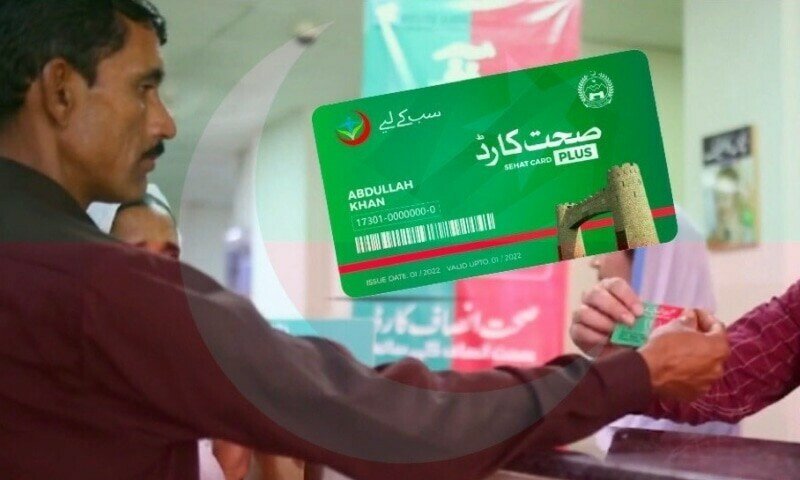
The Sehat Card program launched for poor and middle-income families in Khyber Pakhtunkhwa (KP) continued to provide major relief this year, benefiting more than a million people across the province.
According to the KP Health Department, a total of 1,085,110 patients received free medical treatment at various public and private hospitals under the Sehat Card program between January and November 2025. During this period, more than Rs31.66 billion was spent on patient care through the scheme.
Official figures show that the bulk of spending was incurred on patients requiring serious and costly medical procedures. These included treatments that are generally not available at basic healthcare facilities, such as major cardiac surgeries, cancer treatment, brain and spinal surgeries, and kidney transplants.
More than 631,000 patients benefited from such complex treatments, with expenditures exceeding Rs23 billion. In comparison, over 452,000 patients received relatively basic medical treatment, costing around Rs8.15 billion.
The report further stated that more than 692,000 patients were treated at public sector hospitals under the Sehat Card, where treatment costs amounted to Rs17.44 billion. In private hospitals, over 333,000 patients availed treatment facilities, with expenses reaching Rs11.51 billion. Thousands of patients were also treated at hospitals operating under public-private partnership models.
Also Read: Rain and Snowfall Likely as Western Weather System Enters Pakistan, Cold to Intensify
Gender-wise data showed that women benefited more from the Sehat Card program than men. More than 585,000 women received treatment through the scheme, compared to over 499,000 men. However, the overall expenditure on male and female patients remained almost equal.
In terms of medical specialties, heart diseases accounted for the highest expenditure. Treatment of more than 52,000 cardiac patients alone cost Rs8.16 billion. Cancer treatment followed, with expenses exceeding Rs3 billion. Although kidney-related ailments involved a larger number of patients, the overall cost remained comparatively lower. Maternity care, general surgery and bladder-related diseases were also among the major areas where a significant number of patients were treated.
District-wise statistics revealed that Peshawar topped the list, with more than 100,000 patients receiving treatment under the Sehat Card at a cost exceeding Rs3.35 billion. Swat, Mardan, Charsadda and Lower Dir were among other districts where the utilization of the Sehat Card remained notably high.
On the other hand, patient numbers from remote and underdeveloped districts remained comparatively low, a trend the Health Department attributed largely to limited access to healthcare facilities in those areas.
Health officials stated that the Sehat Card program has provided substantial financial relief to poor and middle-income families by shielding them from the burden of expensive medical treatment.
However, they acknowledged that the rising costs of treating heart disease, cancer and other complex illnesses continue to place sustained pressure on the provincial health budget.
Officials added that strengthening hospitals at the district level could not only improve access to healthcare for patients but also help reduce the overall financial burden on the Sehat Card program.

.jpeg)
Comments
No comments yet. Be the first 🙂