


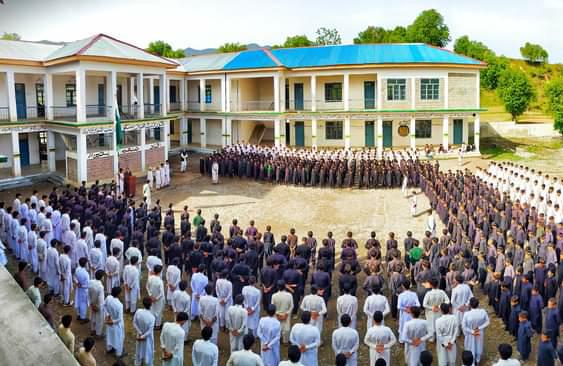
The law and order situation in Tirah Valley, along with fears of a possible military operation, has forced thousands of families to migrate, disrupting not only daily life but also pushing students’ education into a severe crisis.
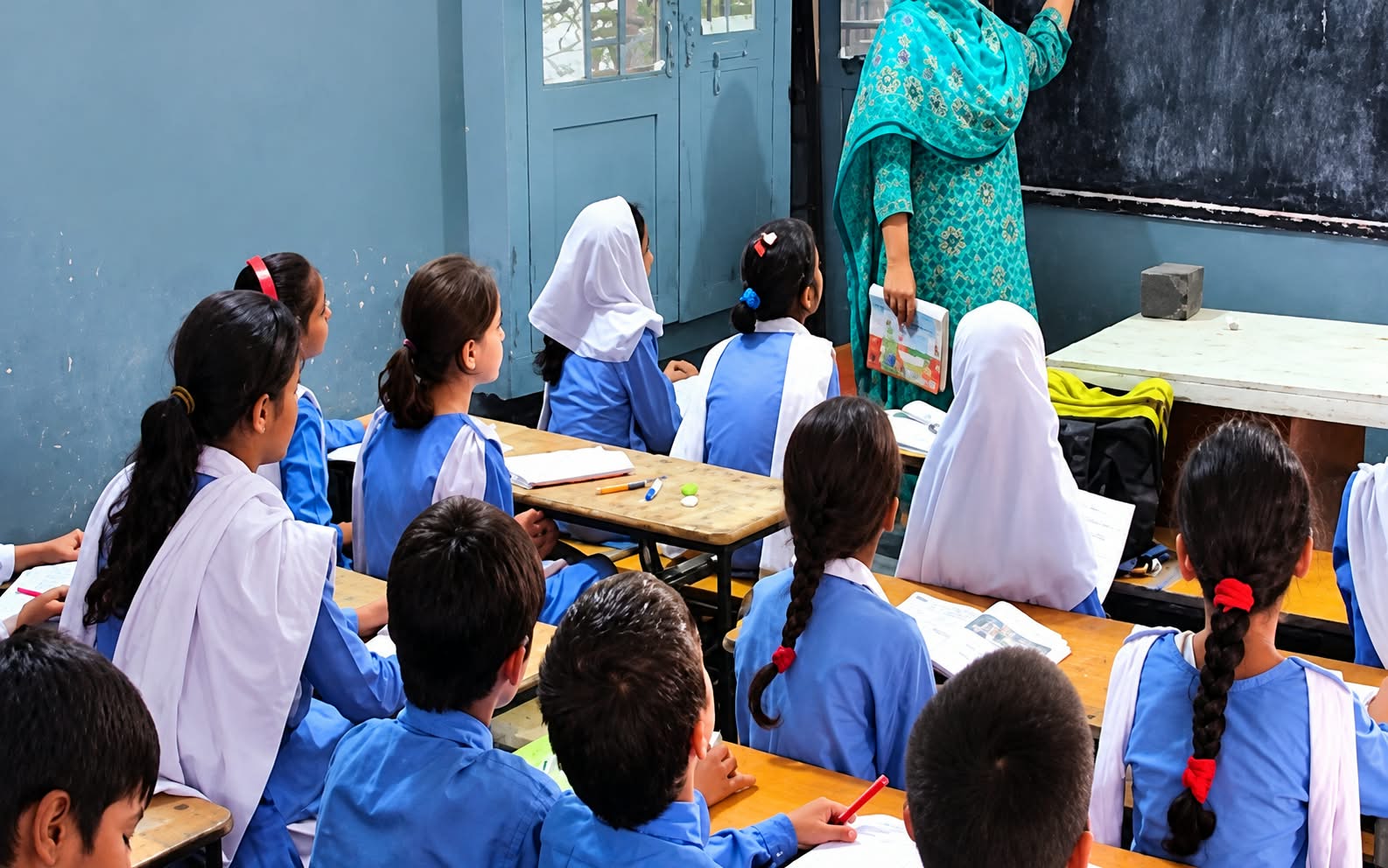
Hundreds of displaced students are now facing exams without proper preparation. They have neither been able to study adequately nor have they received clear information about their roll number slips or examination centers.
These 9th and 10th grade students are appearing for exams in an environment of uncertainty, where academic continuity has been completely disrupted. Affected families are already struggling with financial hardships, and now their children’s education is also at stake. The lack of any special arrangements at the government level has further worsened the situation.
Also Read : Torkham set for Afghan returns, but border reopening awaits official orders
Muhammad Usman, a 9th-grade student from a government high school in the Warsak area of Tirah Valley, became a victim of a tragic incident. He was attending a relative’s wedding with eight friends when they were hit by a drone strike, resulting in the loss of his left leg. Recently, he also migrated with his family, but despite exams being near, he still has no information about his roll number or examination center.
According to Usman, “Over the past year, education has been badly affected due to insecurity. There was constant fear because of ongoing firing incidents, and student attendance in school had almost dropped to zero.
Mortar shells fell in the school courtyard several times, damaging the building. Teachers also stopped coming to school. We practically did not study at all, and now exams are about to begin.”
Like Usman, hundreds of students are deeply concerned that board exams will be conducted under normal conditions, despite their disrupted academic year.
In the remote Tirah Valley of Khyber District, migration began in November last year due to fears of a possible military operation, while formal registration of displaced families started on January 6.
According to the Khyber Education Department, there were 3,300 students enrolled in 16 government boys’ schools in Tirah, while 400 girls were studying in 5 girls’ schools. Additionally, 5,000 students were enrolled in 10 private high schools, 3,000 boys and 600 girls in 7 private middle schools, and 600 boys and 300 girls in 2 private primary schools.
Exams for 9th and 10th grades, starting from March 31, will be attended by 500 boys and 60 girls. Overall, more than 13,000 students have been affected by this situation.
So far, 1,600 students have been enrolled in various government schools in Bara, and an awareness campaign is ongoing to enroll more displaced students.
For Hamza Khan, an 8th-grade student, this transition has also not been easy. In early January, he migrated with his family from Tirah to Khajori in Bara, where he enrolled in Government High School Kohi Sher Haider.
Previously, Hamza was studying in a private school, but due to financial difficulties after migration, his parents could no longer afford private education.
Hamza says, “I was studying in a private school in Tirah where the quality of education was better. We had completed the 8th-grade course and had started 9th-grade studies. But after coming here, we are being taught the 8th-grade syllabus again. Due to financial constraints, continuing in a private school is not possible.”
When officials from the Board of Elementary and Secondary Education were asked about any special arrangements for affected students, they stated that no separate policy or facilitation exists. Exams will be conducted in the same manner as for other students.
Officials added that during the 2009 Swat operation and the COVID-19 pandemic, the provincial government had made formal decisions which were implemented by education boards. However, no such measures have been taken so far in the case of Tirah.
In this regard, District Education Officer Khyber, Misri Khan, told TNN that a total of 82 students from two government high schools—Warsak Shalobar and Painda Cheena—will appear in the matric exams starting March 31.
He said that principals of the respective schools have been assigned the responsibility of downloading and providing roll number slips to students on time, while private school administrations will handle this for their students.
He further explained that this year’s board exams will be conducted under a cluster system, where students will be distributed across different examination centers.
According to the DEO, no policy regarding grace marks or additional relief has been announced so far. However, to facilitate students, the education department and district administration are coordinating to arrange accommodation near examination centers.
Saeed Khan, who migrated from Tirah and is now living in a rented house in Bara, is also facing severe difficulties. His four children were studying in private schools in Tirah, but he can no longer afford to enroll them in private institutions.
One of his sons is in 9th grade and has exams approaching, yet they have no information about his exam center or roll number.
Saeed Khan says, “When my son contacted the school administration for the roll number slip, they said that 20,000 rupees in fees are pending and the slip will not be issued until full payment is made. We borrowed 10,000 rupees and paid it, but the school is still demanding the full amount. On one side, we are dealing with displacement, and on the other, our children’s education—it's overwhelming.”
Last year as well, due to insecurity, examination centers for over 400 students from Tirah were shifted to Bara, where students appeared in exams despite severe difficulties.

.jpeg)
Comments
No comments yet. Be the first 🙂