


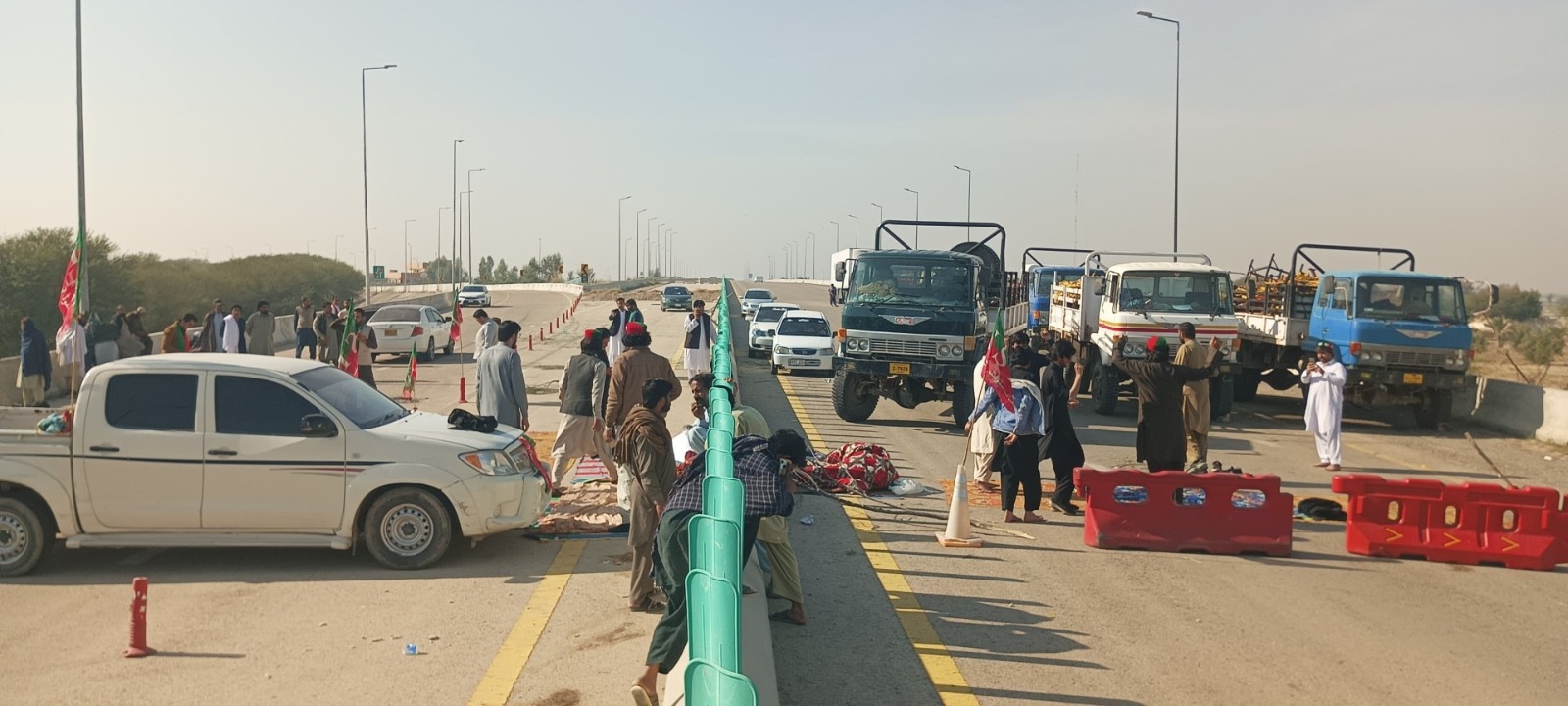
Pakistan Tehreek-e-Insaf (PTI) announced a nationwide protest, citing Imran Khan’s eye condition as the reason. Apparently, the protest was meant to take place across the country, but as has often been the case, it remained largely confined to Khyber Pakhtunkhwa.
Importantly, the call was not issued by the party’s central leadership but by Youth Wing head and absconding leader Khalid Khurshid. The protest began in Peshawar and, within a single day, major highways linking Khyber Pakhtunkhwa to Punjab and Islamabad were blocked.
Closed Roads, Paralyzed Daily Life:
Five days have passed, and the situation remains unchanged. The Hazara Motorway at Havelian, Anbar Interchange (M-1 Motorway) in Swabi, Khushal Garh on the Kohat–Rawalpindi Road, the Dera Ismail Khan–Bhakkar Road, the Dera Ismail Khan–Mianwali Road, and the CPEC Yarik Interchange are all closed due to the protest. Connectivity between Khyber Pakhtunkhwa and Punjab has effectively been severed.
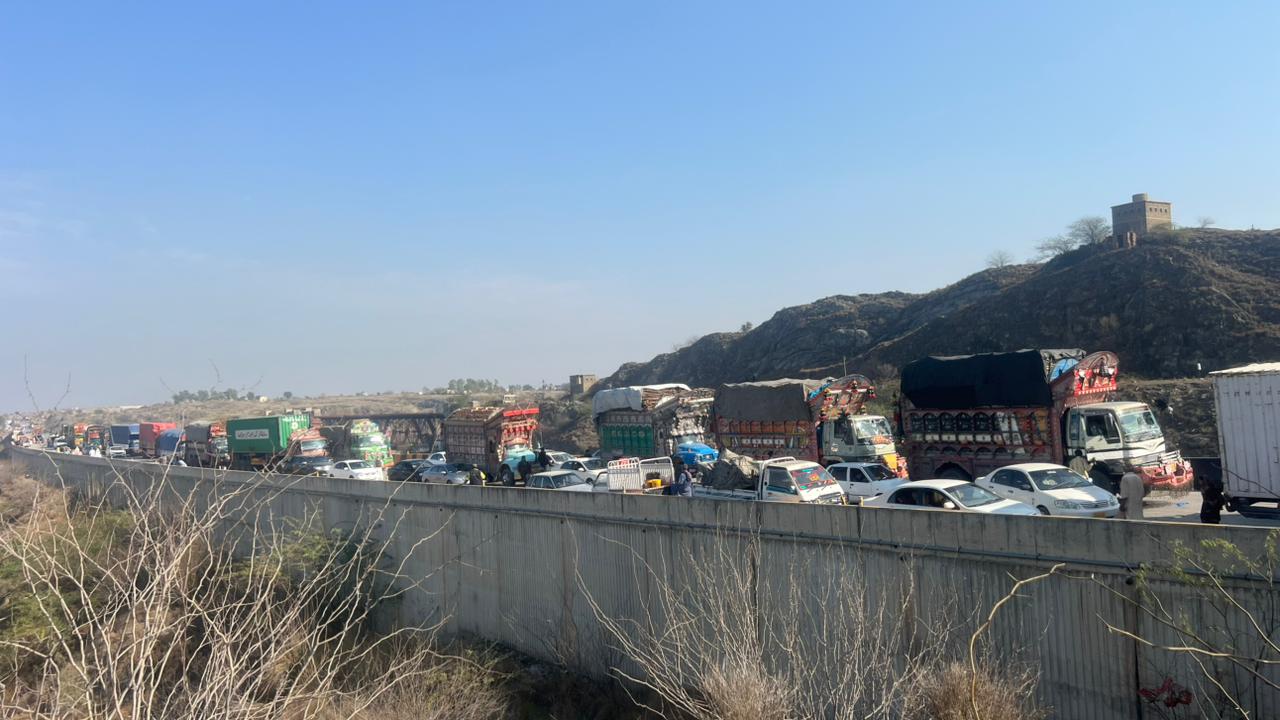
After intense public pressure, the GT Road at Attock was reopened, but the closure of other routes has shifted the entire traffic burden onto this single road.
.jpeg)
Long queues stretching several kilometers have formed. Women, children, and elderly passengers stranded in vehicles are forced to approach nearby villages to request access to basic necessities.
Transporters are complaining of heavy financial losses, and in several areas heated exchanges have occurred between protesters and citizens.
Protest Without Leadership?
In practical terms, the protest is proceeding without central leadership. Senator Khurram Zeeshan is present at Khushal Garh, Provincial Minister for Local Government Meena Khan Afridi, Information Adviser Shafi Jan, and Youth Wing leaders are in Swabi — yet workers appear unwilling to listen to anyone. They are staging sit-ins of their own accord.
Also Read : PTI Sit-in Enters Fourth Day, Kohat–Pindi Road Remains Closed
Khyber Pakhtunkhwa Chief Minister Suhail Afridi, along with his parliamentary party, is holding a sit-in at the KP House. Speaker Babar Saleem Swati, former Chief Minister Ali Amin Gandapur, and other assembly members are also present there.
.jpeg)
However, party leaders themselves acknowledge that the workers are not under their control. This situation highlights a lack of internal discipline within a political party.
A Crisis of Trust:
When protesters are approached, they demand Imran Khan’s medical treatment but express distrust toward almost everyone. After disappointment with Ali Amin Gandapur, questions are now being raised about Suhail Afridi as well. Barrister Gohar and Junaid Akbar have also failed to maintain workers’ confidence.
At present, the party appears to be looking toward Mahmood Achakzai and Allama Nasir Abbas for major decisions, even though both lead their own separate political parties.
The leadership vacuum has informally elevated them as trusted figures. This scenario makes it clear that while the protest may be intense, its political direction remains uncertain.
The direct impact of this uncertainty is being borne by the people of Khyber Pakhtunkhwa. Administrative affairs have been disrupted for five days.
With only two days left before Ramadan, the supply chain of essential food items has already been affected for nearly a week. Markets are under pressure.
Rampura Bazaar, considered a major grain market in the province, is under extraordinary strain. Traders are bringing their reserved stock into the market to prevent an immediate crisis, but this is only a temporary solution.
More than 70 percent of chicken meat in Khyber Pakhtunkhwa comes from Punjab, while 75 percent of flour supply also depends on Punjab. Pulses, sugar, gram flour, and other commodities are similarly reliant on Punjab.
If the road closures continue, a sudden and uncontrolled surge in prices cannot be ruled out.
This protest appears to be causing more of an administrative and economic crisis than advancing its stated political objective.
The question is not why the protest is happening; the question is whether there is any organized leadership, clear strategy, or exit plan.
When political leadership loses control over its workers and a province effectively shuts down, the damage is not limited to the government or the opposition — the greatest cost is paid by ordinary citizens.
.jpeg)
Comments
No comments yet. Be the first 🙂