


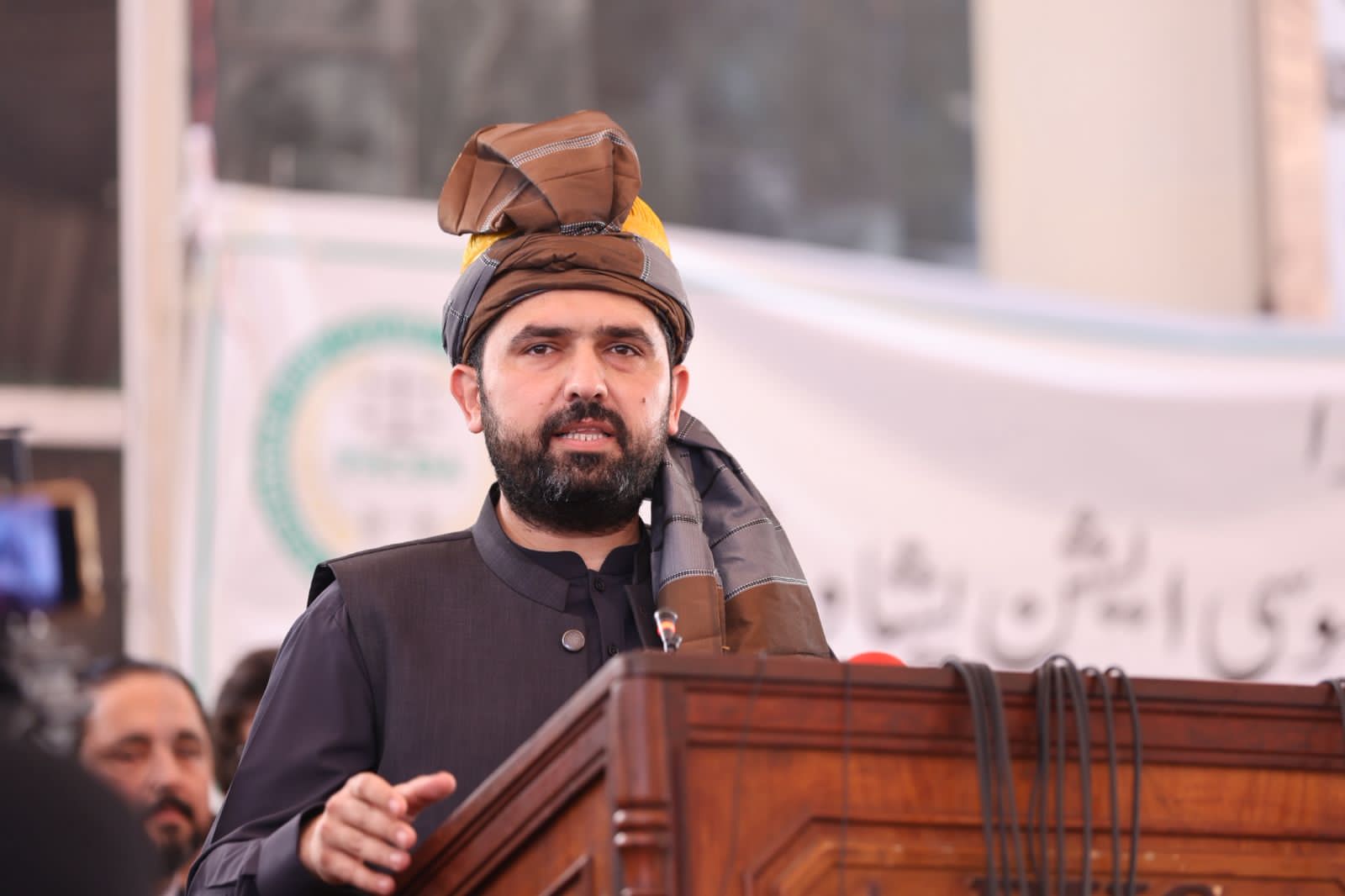
Khyber Pakhtunkhwa Chief Minister Muhammad Suhail Afridi’s honeymoon period has now formally come to an end. Initially, it was believed that his phase of political acceptance would not last more than two months.
However, he managed to keep the party temporarily active, maintain worker engagement, and benefited from early support on social media, which helped create a favorable atmosphere. As a result, this period stretched to four months.
That phase, however, has now passed, and the politics that followed have placed him in a situation where he appears almost alone on multiple fronts.
Internal Party Differences:
The first front lies within his own party. The party is currently visibly divided into factions. Although he enjoys the support of Aleema Khan and appears to be in full alignment with her, this very association has also caused resentment within a significant segment of the party.
Those who oppose Aleema Khan tend to place Suhail Afridi in the same camp. As a result, he is operating in an environment where unity is weakening while resistance is steadily growing.
Also Read : "No Politics Around Imran Khan’s Treatment,” KP CM Issues Stern Warning
Tensions with the Federal Government:
The second front involves the federal government. His relations with the center are neither longstanding nor based on personal connections. Consequently, he does not enjoy the flexibility or facilitation in dealing with the center that some former chief ministers had.
He has also been unable to establish complete control over bureaucratic and police matters. The federal government appears able to implement its decisions relatively easily, while the provincial government often finds itself in a reactive position. This imbalance has confined Suhail Afridi largely to a defensive political strategy.
Establishment and Security Situation:
The third and most sensitive front concerns the establishment and the security situation. Operations are ongoing in various parts of the province. Large numbers of people have been displaced from regions such as Kurram and Tirah.
Drone strikes and incidents of terrorism have further complicated the atmosphere. In southern districts, questions remain regarding the writ of the state. In such an environment, the chief minister’s role becomes extremely delicate.
If he distances himself from the establishment, it creates an impression of weakness; if he moves closer, political opposition opens a new front against him. Maintaining this balance is far from easy.
Lack of Experience:
Alongside these challenges, a fundamental issue is his lack of experience. Comparisons are inevitably drawn with Ali Amin Gandapur, who spent five years in the provincial cabinet and three and a half years in the federal cabinet.
He possessed experience in administrative matters, connections with centers of power, and familiarity with political ups and downs. Suhail Afridi does not have a similar background.
As a result, distinguishing between allies and adversaries, understanding the balance of power, and anticipating the consequences of swift decisions have become difficult tasks for him. At times, those who appear to be close associates end up causing political damage.
A New Front on Social Media:
Another significant front is social media. For the first time, the party’s digital base appears clearly divided. While official party accounts and central leadership continue to show support, a large segment of grassroots social media workers has adopted a critical stance.
This shift is not minor, given that in recent years narrative-building has largely taken place on these platforms. When workers themselves begin to raise questions, the leadership’s isolation becomes even more pronounced.
Overall, Suhail Afridi has entered a political phase where circles of support are shrinking while spheres of opposition are expanding.
Internal rifts, tensions with the federal government, security challenges, lack of experience, and divisions on social media are collectively forming a pressure chamber around him.
It would not be wrong to say that with the end of the honeymoon period, the real test has begun—and the most striking feature of this test is his growing political isolation.
.jpeg)
Comments
No comments yet. Be the first 🙂