


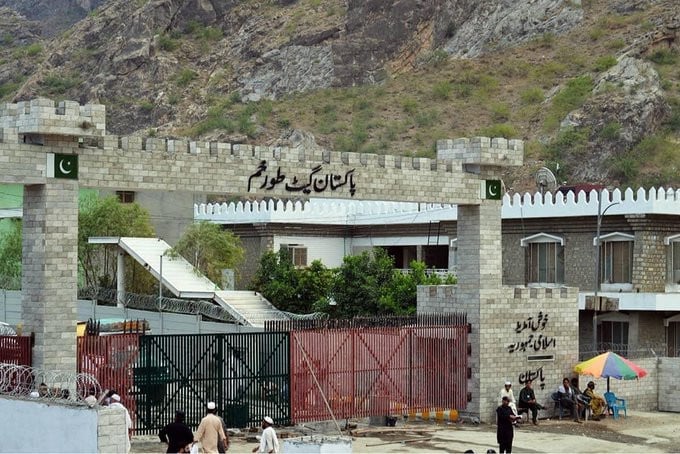
Torkham Border Crossing has been closed for more than four months to all kinds of movement and trade activities, causing Pakistan to incur export losses exceeding $240 million, while the overall trade deficit has reached billions of rupees. The prolonged closure has left thousands unemployed and crippled the economy of border areas.
According to border sources, the crossing has remained shut since October 12 last year. Before the closure, exports worth approximately $2 million per day and imports of up to $54 million per day were conducted through Torkham.
If we estimate the loss based only on daily exports of $2 million over 120 days, the damage exceeds $240 million. The suspension of imports is also feared to have caused losses amounting to hundreds of billions of rupees.
Also Read : Thousands Displaced in Kurram Struggle in Camps, Demand Immediate Return and Ramadan Aid
Prior to the shutdown, around 10,000 people and between 500 to 700 cargo and passenger vehicles crossed the border daily.
The sudden disruption has severely affected the supply chain, transport networks, and border markets.
President of the All Customs Clearance Agents, Mujeeb Shinwari, stated that thousands of people associated with various sectors at Torkham have lost their livelihoods.
More than 150 clearance agents’ offices have closed, and at least 1,000 individuals have directly become unemployed. “Dozens of families’ kitchens have gone cold. If immediate measures are not taken, the losses could become irreparable,” he warned.
According to Zakir Shinwari, President of the Torkham Labor Union, over 4,000 laborers were dependent on border-related activities.
Drivers, loading and unloading workers, hotel owners, and other service providers have also been severely affected.
He added that the closure of trade is impacting factories across the country, as the supply of raw materials and finished goods has come to a halt.
Faisal Malook, Vice President of the Landi Kotal Traders Union, said that local markets have become deserted due to the suspension of border trade, and daily buying and selling activities have nearly come to a standstill.
With the halt in imports of vegetables and dry fruits from Afghanistan, prices of tomatoes, onions, almonds, raisins, figs, pistachios, and pine nuts have increased in local markets. Meanwhile, the suspension of Pakistani exports to Afghanistan — including potatoes, kinnow, bananas, jaggery, and medicines — has caused prices to drop domestically, resulting in financial losses for farmers and industrialists.
Tensions escalated after attacks by Afghan Taliban on Pakistani security check posts during the night between October 11 and 12, followed by retaliatory actions.
As a result, besides Torkham, the Kharlachi Border Crossing, Ghulam Khan Border Crossing, Angoor Adda Border Crossing, and Chaman Border Crossing were also closed.
Senior journalist Islam Gul Afridi noted that Pakistan has signed several trade and energy agreements with Central Asian countries, but tensions with Afghanistan are hindering these initiatives.
He cited the example of the CASA-1000 project, stating that regional instability has prevented the country from fully benefiting from it. According to him, without Afghanistan, land access to Central Asia is not possible.
Local elders, traders’ associations, and labor representatives have jointly demanded that both countries immediately initiate political and diplomatic negotiations and devise a phased plan to reopen Torkham and other border crossings.
They emphasized that the issue extends beyond a single border point and is directly linked to bilateral trade, regional connectivity, and the economic future of thousands of families.



.jpeg)
Comments
No comments yet. Be the first 🙂