


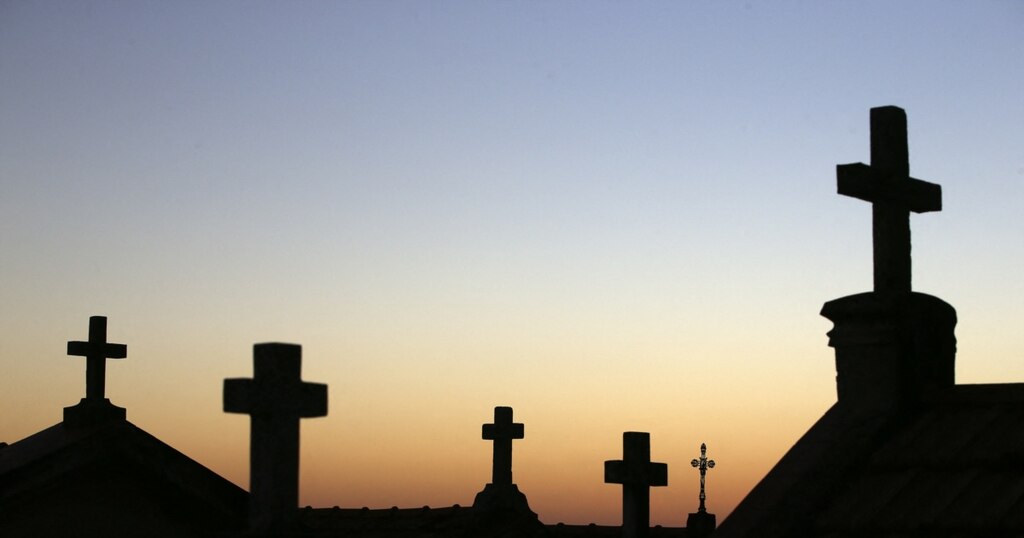
Christian Community in Bajaur: Four Decades of Belonging
The Christian community living in Bajaur, a tribal district of Khyber Pakhtunkhwa, has been part of this region for the past four decades. Mostly belonging to the working class and low-income groups, this community is fully integrated into Bajaur through its daily life, employment, and social connections.
However, one of the most fundamental human rights — the right to a dignified burial — remains out of reach, as there is no Christian graveyard in the district.
Hardships Multiply After Death:
When a loved one passes away, families are forced to transport the body more than 150 kilometers to Nowshera for burial. Securing permission to bury the deceased there, along with arranging transportation and other expenses, creates severe financial and emotional stress for already struggling families.
Administrative complications and lack of resources further intensify the pain during moments of grief, making this a persistent issue for the community.
Jameel Masih: Lack of Graveyard Is a Constant Agony
According to Jameel Masih, former General Secretary of the Christian community in Bajaur, around 150 Christian families have been living in the district for decades, yet they still lack basic facilities to perform their religious rites.
Also Read : Vanishing Winters of Swat: Climate Change Threatens Farms, Water, and Livelihoods
“The issue of the church has been resolved, but the graveyard problem still remains. When someone from the community passes away, the absence of a graveyard becomes an added torment alongside grief,” he says.
Recently, after the death of a community member, Wilson Masih, the family had to take the body to Nowshera for burial, where even obtaining permission was not easy.
Allegations of Corruption in Minority Quota:
Another community representative, Pervez Masih, stated that besides the graveyard issue, the quota system reserved for minorities is allegedly plagued by corruption.
“People who do not belong to the community were appointed under the minority quota based on connections and recommendations. This is a clear violation of the Constitution, and transparent investigations should be conducted,” he said.
A National Issue of Human Dignity:
Minority rights activist Haroon Sarbadyal believes that the lack of graveyards and cremation grounds is not limited to Bajaur or Khyber Pakhtunkhwa but is a national issue linked to human dignity.
Referring to past incidents, he mentioned that in 2008, the desecration of a Hindu citizen’s body in Sindh and difficulties faced during Hindu funeral rites for a foreign diplomat in Islamabad drew international criticism toward Pakistan.
Funds Allocated, Projects Incomplete:
According to Sarbadyal, up to 1.13 billion rupees were allocated in Khyber Pakhtunkhwa for the establishment of graveyards and cremation grounds for Hindu, Sikh, and Christian communities. However, due to land unavailability, security concerns, political interference, and alleged corruption, these projects remain incomplete.
“It is essential to consult local communities to provide these facilities in order to maintain social harmony,” he emphasized.
Administration’s Response:
The local administration of Bajaur states that issues faced by minority communities are being addressed on a priority basis. The church issue has been resolved, and its inauguration was carried out by Minority Member of the Provincial Assembly, Wilson Wazir.
Regarding the graveyard, the administration said that 5 million rupees have been allocated, and once a suitable location is identified, land will be purchased and handed over to the community to permanently resolve the longstanding issue.
Despite official claims, the Christian community in Bajaur remains deprived of the right to bury their loved ones with dignity. This situation raises serious questions about minority rights, human dignity, social equality, and constitutional guarantees.
The question still stands: When will minority communities living in tribal districts be granted the dignity in death that the Constitution of Pakistan promises?

.jpeg)
Comments
No comments yet. Be the first 🙂