


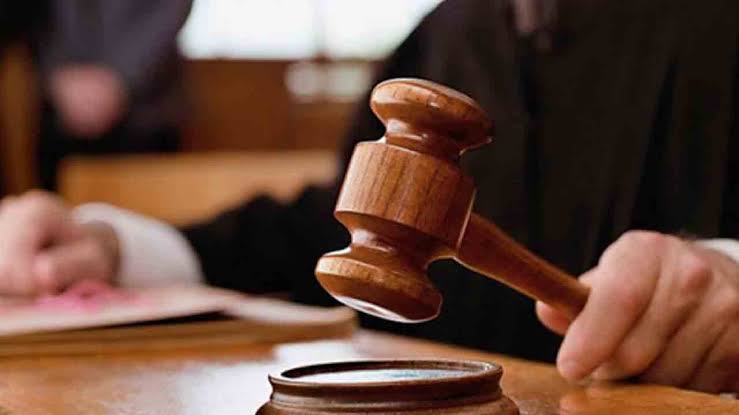
The courtroom fell silent as the Additional Sessions Judge Shabqadar-II delivered the verdict on April 28 in the case of the murder of two women, sentencing the accused, Bakhtiar alias Kocha, to death twice.
This verdict marked the conclusion of a case that had kept the affected family waiting for justice for four years.
After the decision was announced, tears filled the eyes of the victims’ family members outside the courtroom. A woman from the family said emotionally, “We finally got justice after four years, but our two daughters-in-law cannot come back.”
The court awarded the accused two separate death sentences for the murder of his wife, Sumaiya, and his sister-in-law, Zeeba, along with a fine of Rs. 500,000 in each case. Additionally, he was sentenced to two years in prison for injuring his mother, Hasan Pari, in the same incident.
According to the prosecution, the incident occurred in June 2022 in Tehsil Shabqadar of District Charsadda, when a heated argument broke out among women in the house over a domestic issue.
The lawyer stated that the accused, enraged by the situation, stepped out of the room and opened fire. As a result, his wife and sister-in-law were killed, while his mother was injured.
Also Read : Khyber: Government school computer teacher shot dead by unidentified assailants in Bara
Deputy Public Prosecutor Sameen Ahmed, who pursued the case, said it was not just a legal proceeding but a struggle for justice for the oppressed women.
“We took this case as a challenge. We remained in constant contact with the affected family, prepared the witnesses, and strengthened all legal aspects so that evidence could be presented effectively in court,” he said.
He added that District Public Prosecutor Sangeen Shah closely supervised the case and provided legal guidance at every stage.
According to Sameen Ahmed, public prosecutors are, in fact, representatives of the people, and when injustice occurs, every possible legal effort is made to ensure justice.
Social activist Samreen Abbas, who works on women’s rights, termed the verdict a positive example. She said the way the prosecution handled the case reflected professionalism and seriousness.
However, she noted that not every case in Khyber Pakhtunkhwa—or across Pakistan—reaches such an outcome. Many cases are affected by weak investigations, poor evidence, and prolonged legal proceedings.
“The flaws in the investigation system are the biggest issue. Often, the police fail to collect evidence properly, which benefits the accused in court,” she said.
She also pointed out that even in this case, the verdict came after four years, and in many instances, affected families are forced into settlements due to the lengthy legal process.
Referring to the social structure of Khyber Pakhtunkhwa, she said that in Pashtun society, jirgas and traditional pressures play a strong role, where families are sometimes pushed toward reconciliation—even in clear cases of injustice.
Violence and killings of women in Pakistan remain a serious concern. Last year, Federal Minister for Law and Human Rights Azam Nazeer Tarar informed the National Assembly that over 7,500 women were killed across the country between 2021 and 2024, including 1,533 in the name of honor.
According to human rights organizations, more than 1,000 women are killed every year in Pakistan, highlighting the severity of the issue.
District Public Prosecutor Sangeen Shah said close monitoring of this case was necessary because it involved the murder of two women.
“It is unacceptable for anyone to commit such a crime and escape the law. In such cases, it is the responsibility of the state to ensure justice for the affected family,” he said.
While this verdict brought justice to one family, it also raises an important question: do all victims receive justice in the same way, or does the journey to justice remain long and difficult for many?


.jpeg)
Comments
No comments yet. Be the first 🙂