


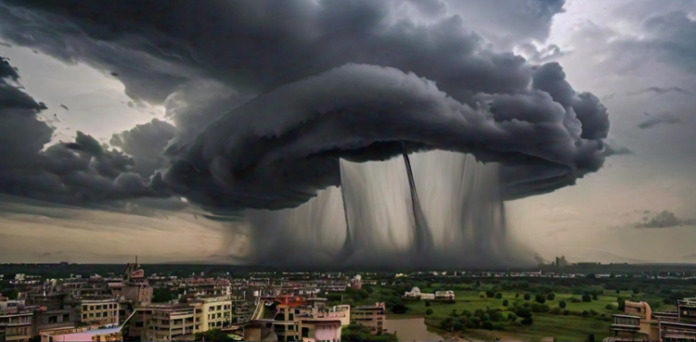
The recent rains have wreaked havoc across different parts of Khyber Pakhtunkhwa, particularly in Bajaur and northern regions. Floods and landslides have claimed over 300 lives and displaced thousands of people.
Alongside this devastation, there has also been a noticeable increase in cloudburst incidents. The recent Bajaur incident has become a matter of concern for both weather experts and ordinary citizens. But what exactly is a cloudburst? Why does it happen? And what factors contribute to it?
What is a cloudburst?
A cloudburst is an extremely intense and short-duration rainfall event, where 100 millimeters or more of rain falls in a small area within an hour. It differs from normal rainfall because it occurs unexpectedly and with extraordinary intensity. Mountainous and northern regions, in particular, are more prone to cloudbursts due to strong wind currents and the collision of clouds.
Why does a cloudburst occur?
According to meteorologist Dr. Faheem, a cloudburst happens when a moisture-laden cloud suddenly releases rain over a confined area. The geography of northern regions—characterized by high mountains and strong winds—creates favorable conditions for this phenomenon. When warm and cold air currents collide, the moisture accumulates in clouds and then suddenly results in a heavy downpour. Essentially, a cloudburst is a cloud that dumps an immense amount of water over a small area all at once. It is caused by the intensity of rain and cloud formation, which is why it is termed a cloudburst.
Dr. Faheem further explained that climate change has intensified the severity of cloudbursts. One major reason is the rise in global temperatures, which increases the amount of moisture in the air.
In addition to this, other contributing factors include deforestation and land degradation in mountainous regions, which have reduced the land’s natural ability to absorb water. As a result, less water infiltrates underground, and rainwater becomes uncontrollable, leading to widespread destruction.
Dr. Faheem stated that human activities have also played a role in triggering such events by disturbing the natural balance of weather systems. To prevent such incidents in the future, he emphasized the need for multiple measures.
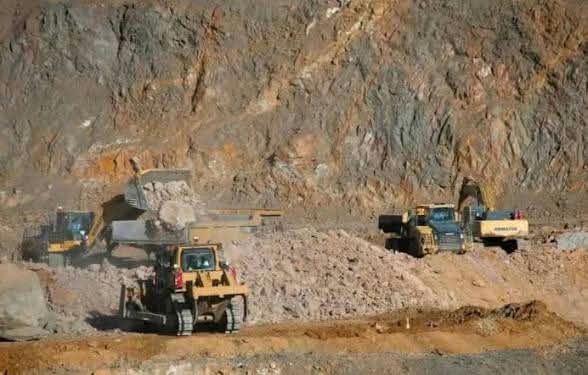
These include protecting forests and promoting afforestation in mountainous areas, developing effective rainwater harvesting systems, imposing strict controls on mining and industrial pollution, improving modern weather forecasting and warning systems, and educating local communities so they can prepare in advance for such events. Additionally, it is essential for us to utilize modern meteorological techniques and satellite monitoring for more accurate predictions.
Adopting eco-friendly policies is also crucial to minimize the impacts of these destructive events. The increase in cloudbursts and intense rainfall is not only a natural process but also a result of human activities. Environmental protection must be given top priority if we are to prevent future tragedies like the one in Bajaur.





.jpeg)
Comments
No comments yet. Be the first 🙂