


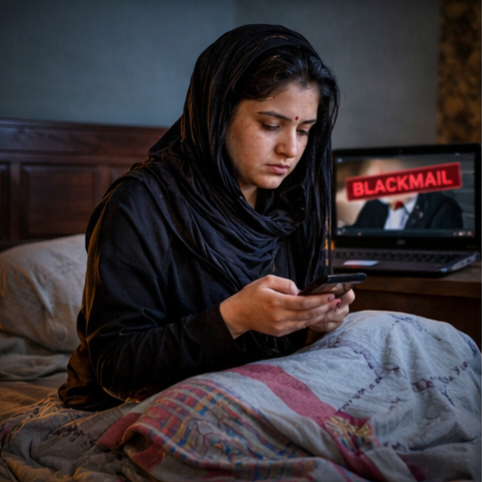
Social media has become an important platform for young girls for communication, education, and expression. However, within this digital world, there exists a silent but serious threat. Cases of fake identities, misuse of trust, and blackmail through private images or information have been increasing.
According to experts, the number of reported cases may be lower than the actual number of victims, as many girls do not file complaints due to fear, family pressure, or lack of confidence.
Asma, a 24-year-old from Banaras, Karachi, shared that she danced at a wedding, and a few days later, she received videos of her dance from an unknown number. She says:
“I was very disturbed. The person kept threatening me that if I didn’t agree to his demands, he would upload the video on social media. He forced me to take calls even at 2 a.m. At first, I hid everything out of fear, but later I told my teacher, who contacted the blackmailer and resolved the issue. Still, I kept receiving calls from different numbers throughout the day, and out of fear, I had to block my SIM.”
.png)
Similarly, Fatima from Kalam, Swat, said that a man was harassing her without reason and claimed that her brother had asked him to keep an eye on her. Fatima said:
“He told me that he had access to my WhatsApp and phone data. He pressured me to create fake accounts and spread my pictures. I spoke to my mother and teacher, and they explained things to the blackmailer. Even now, I live in fear and find it difficult to go out alone.”
Fatima said she wanted to register an FIR, but due to fear of defamation and family hesitation, she could not proceed.
.png)
According to Pakistan’s Federal Investigation Agency (FIA) Islamabad, with the increasing use of social media, cybercrime cases have significantly risen. FIA official Muhammad Ishaq said that in recent years, cases of cyber harassment and blackmail have increased by 50 to 100 percent, with most cases linked to WhatsApp, Facebook, and Instagram.
Also Read : Blamed, Beaten, and Buried: The Truth About HIV and Trans Lives in KP
In recent years, a total of 2,473 new cyber harassment complaints were received, of which 58.5% of victims were women. Similarly, 2,695 complaints were registered, with 84% related to harassment, and 58.6% filed by women.
According to Muhammad Ishaq, cyber blackmailers usually first build trust, show sympathy, and then try to obtain private information or images. Sometimes, they use phishing websites to steal login credentials or create fake accounts of friends so that the victim does not suspect them. In many cases, people known to the victim—such as friends, classmates, or relatives—turn out to be more dangerous because they already have personal information.
He further advised that girls should not panic, should never make any payments, and must stop further communication. They should inform their parents or a trusted person and immediately report the matter to the FIA Cyber Crime Wing. It is also important to preserve evidence: screenshots, chats, videos, profile links, call logs, and records of any financial demands. This evidence must be saved before blocking the account or deleting anything.
Experts say that family pressure and social attitudes often become barriers to reporting such incidents. Digital media expert and co-founder of Daman TV, Nusrat Gandapur, stated that online harassment of women is not just an individual issue but a societal one. She said:
“Cyber harassment is not limited to girls; any account associated with a woman can be targeted. The goal is often to misuse personal information or images. The more access a woman has in the online world, the greater the risks, even if the perpetrator is in another country.”
She further added:
“In our society, family pressure and social attitudes often prevent victims from reporting. Women hesitate to file complaints because they fear it will make their personal and social lives more difficult. Therefore, awareness and education are essential so that girls understand their rights and stay safe.”
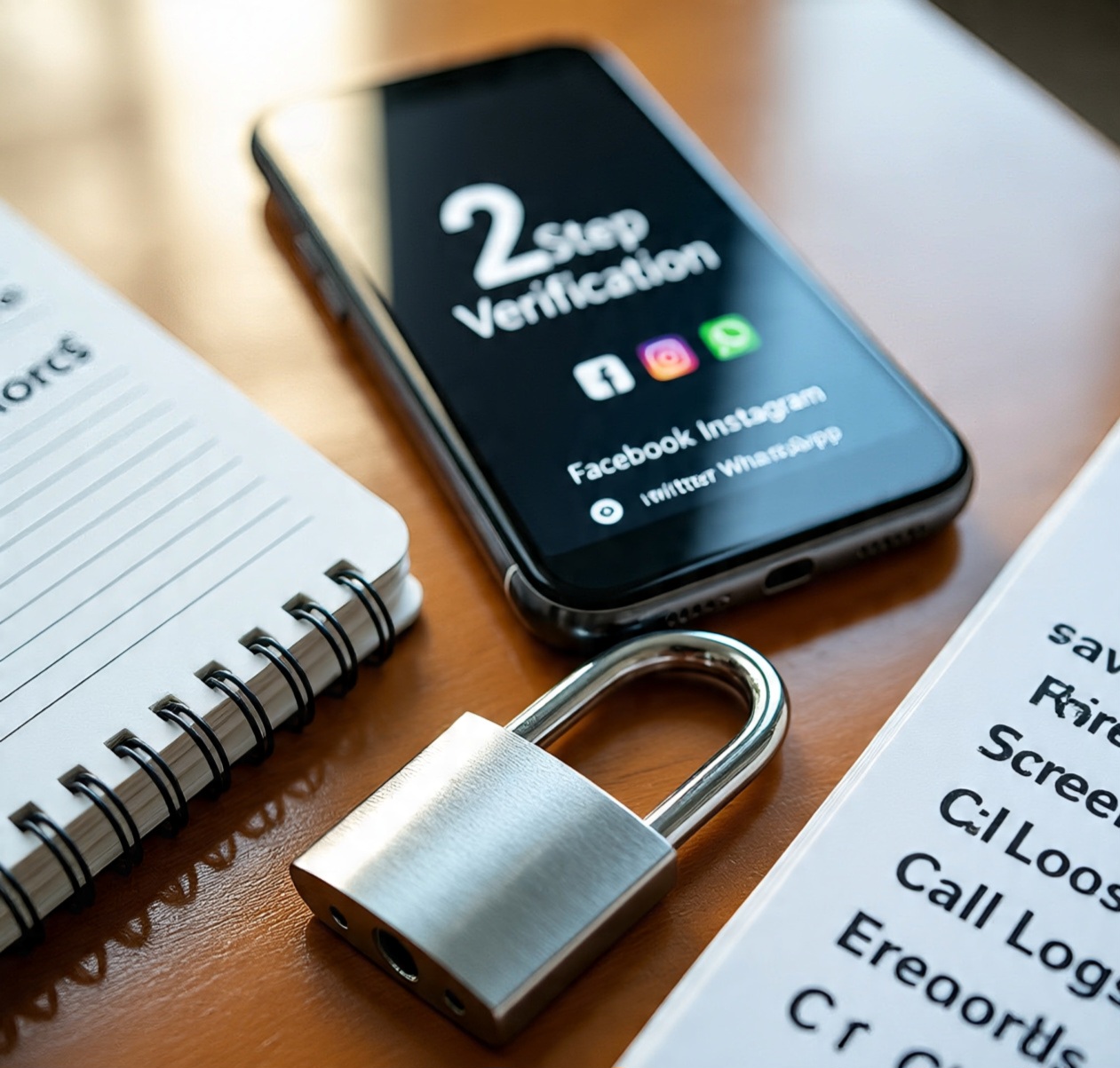
According to IT expert and Monitoring and Evaluation specialist Adnan Mohmand, young girls often become targets due to common technical mistakes such as ignoring privacy settings, clicking on suspicious links, sharing personal life details, using weak passwords, and accepting friend requests from strangers. Hackers often build relationships over time, show sympathy, and then attempt to obtain private information or images.
1.png)
He further advised that if someone suspects misuse of their data, they should immediately change passwords, enable two-factor authentication, review privacy settings and friend lists, log out of unknown devices, and avoid installing unverified apps. Accounts should always be kept secure, only trusted contacts should be added, app permissions should be reviewed, and personal photos should not be uploaded to unsafe platforms.
Many girls, out of fear, delete their accounts, which is a mistake because it removes evidence. The correct approach is to take screenshots, save profile links, avoid deleting chats, and, if possible, keep screen recordings. They should report the account on the platform and file a complaint with the FIA Cyber Crime Wing through helpline 1991 or the official website. Never agree to any demands or payments.
2.png)
If such a situation arises, one should not hesitate to speak to a trusted person. Silence is the blackmailer’s biggest weapon.
Remember, the safety of your personal information and images is in your hands. In any suspicious situation, immediately consult a trusted person and report to the FIA Cyber Crime Wing. Awareness, caution, and timely action are the keys to a safe online life.




1.jpeg)

Comments
No comments yet. Be the first 🙂