


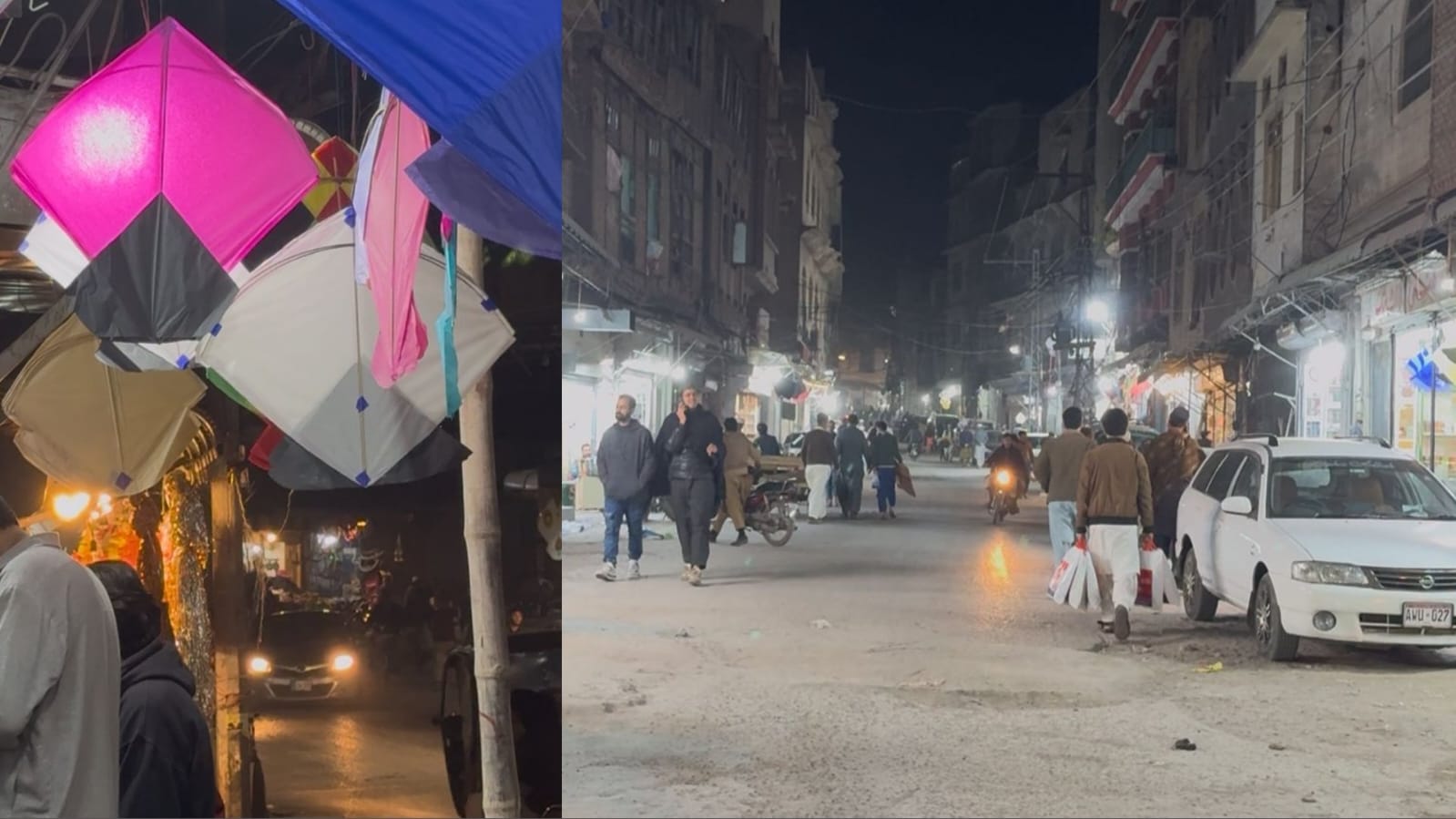
Peshawar’s historic Yakatoot Bazaar, once bustling with colorful kites and reels, seems to have lost its vibrancy as soon as the Basant season ended.
Surprisingly, the reason is not a lack of customers but the skilled craftsmen who left Peshawar for Punjab at the peak of the season.
With the arrival of Basant, nearly 95 percent of the workers employed here moved to Punjab, leaving factories in Peshawar deserted and causing local shopkeepers to suffer losses worth millions of rupees.
Migration of Skilled Workers and a Broken Supply Chain:
Anwar Saeed, President of the Khyber Pakhtunkhwa Kite Association, has expressed deep concern over the situation. According to him, this is not merely a matter of paper and bamboo but a large industry currently facing a crisis of skilled labor.
He explains that as soon as Basant celebrations gained momentum in Punjab, 99 percent of the craftsmen working in Peshawar’s factories — most of whom belonged to Punjab — returned to their hometowns.
Also Read : Spring, Kites, and Caution: A Tradition That Can Turn Deadly
He says, “Kite making is originally a Punjabi craft, and in Peshawar, local craftsmen account for less than one percent. We even increased their wages up to three times to retain them, but the rising demand and attractive pay in Punjab outweighed our efforts.”
As a result of this large-scale migration, the market ran out of stock despite strong demand. One shopkeeper received more than 27,000 online orders but did not have a single kite available for supply.
A Week’s Earnings and a Billion-Rupee Dream:
Yakatoot Bazaar houses more than two dozen major kite shops and several factories, providing livelihood to thousands of families.
According to Anwar Saeed, had the workers not left Peshawar at such a crucial time, the market could have generated over five billion rupees in a single season.
Explaining further, he says, “You can gauge the demand from the fact that despite severe shortages, I sold kites worth more than ten million rupees in just one week. Unfortunately, due to lack of stock, we were unable to meet the full demand of buyers.”
Closed Factories and Lack of Local Expertise:
Faiz Yab Jan, who has been running a shop in the market for nine years, shares the same distress. He says his factory previously employed 100 workers from various cities of Punjab working day and night, but now only 20 remain.
Aurangzeb echoes similar concerns, calling the closure of factories and disruption of the supply chain an alarming sign for the industry.
Shopkeepers say that although kite flying is an expensive hobby, people in Khyber Pakhtunkhwa have now embraced it enthusiastically.
The real issue, however, is the absence of local craftsmen, making the industry dependent on external labor. Anwar Saeed cites India as an example, where this industry reportedly generates annual revenue of four billion rupees.
Demand for Government Policy and Safety Measures:
Traders of Yakatoot are united in urging the Khyber Pakhtunkhwa government not to let this industry slip away. They demand that young people in Peshawar be trained in kite making to ensure a permanent solution to the shortage of skilled workers.
They also call for a comprehensive policy that allows the sport and business to continue safely without the use of hazardous chemical strings. By granting it formal industry status, they argue, the government can safeguard the livelihoods of hundreds of thousands of people.
Basant may have passed, but the silent bazaars and closed factories of Yakatoot still await the attention of authorities. The question remains: will next year bring the same helplessness, or will Peshawar’s own kites once again soar high in the sky?



.jpeg)
Comments
No comments yet. Be the first 🙂