


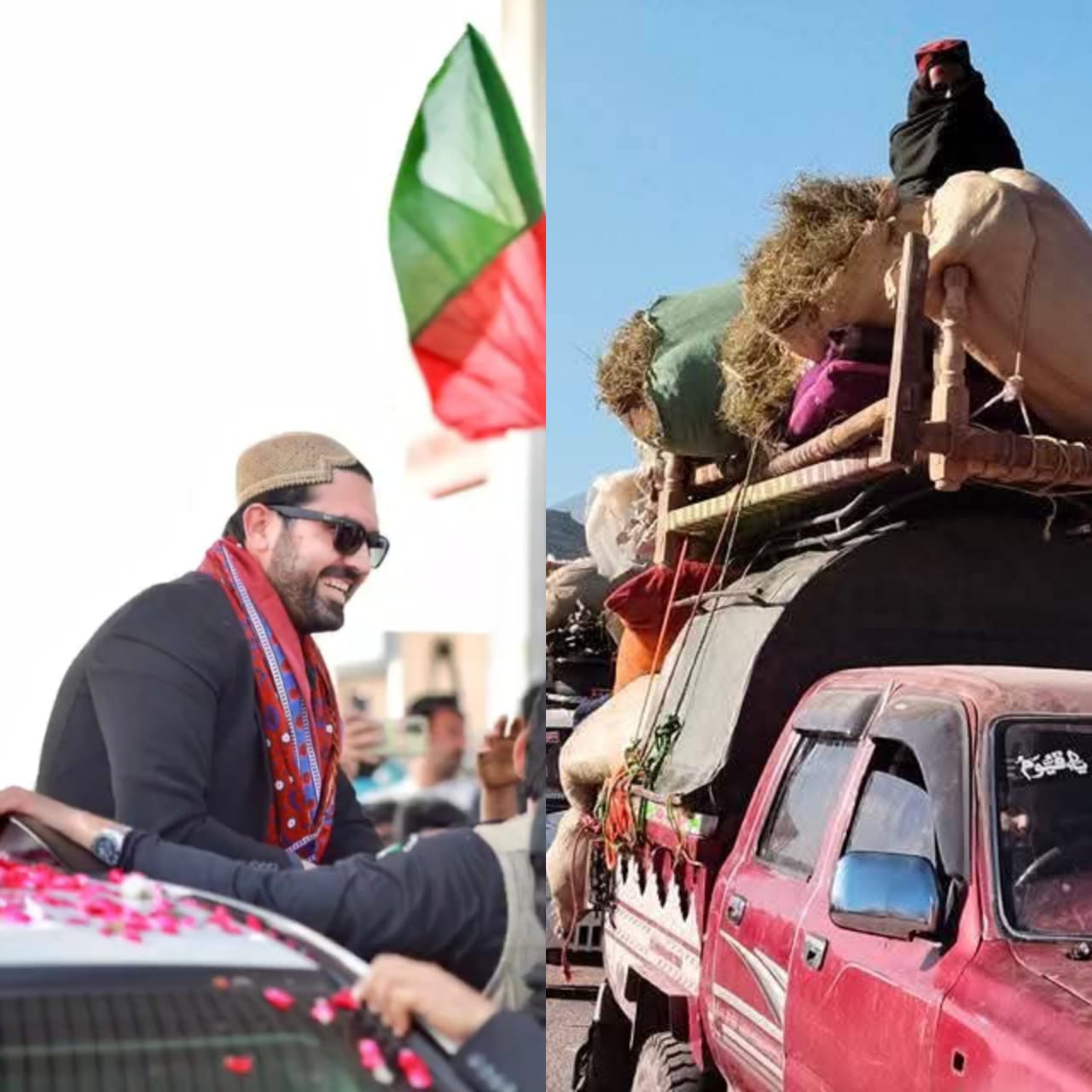
Is this the time to raise the slogan of 804, or to stand with the displaced victims of Tirah Valley?
Tirah Valley—once known for its lush mountains, dignified tribal traditions, and an atmosphere of peace and calm—is once again trapped in displacement, poverty, and a severe lack of basic facilities. The valley may never have enjoyed modern amenities, but it had peace, security, and everything essential to keep a society alive. Tragically, all of this has been taken away from its people.
For years, the tribes of Tirah have been used as fuel for an endless war. Innocent people are being killed, families are being destroyed, and the most painful truth is that the victims still do not know what crime they are being punished for.
Sometimes in the name of counterterrorism, sometimes in the name of peace, they have repeatedly been forced to abandon their homes, their land, and their memories. Today, once again, the same scenes, the same fear, the same suffering, and the same displacement are being repeated.
The most distressing aspect of this entire situation is that the elected representatives of Tirah—those who were sent to assemblies and corridors of power through the people’s votes—now appear indifferent to the suffering of the very people who elected them. Tirah Valley is once again wandering homeless.
Elderly people, children, and women are forced to live under the open sky in severe cold. This displacement is not a new story; it is an old wound that is reopened every few years. This time, however, the pain is not only of homelessness but also of neglect and indifference.
True leadership is defined by the ability to feel the pain of one’s people, to stand shoulder to shoulder with them in difficult times, and to treat their problems as one’s own. Sadly, the people of Tirah appear to be deprived of such leadership. Today, Tirah stands as a clear example of the Khyber Pakhtunkhwa government’s apathy and lack of attention.
The displaced people of Tirah are watching all of this closely. They see that the Chief Minister himself, along with several provincial ministers who belong to their ancestral region—who during election campaigns visited every village, every hujra, every jirga to seek votes—have today abandoned those very people. Today, they are busy chanting slogans of 804, moving in official convoys, enjoying state protocol, and undertaking nationwide tours, while their own people are freezing in the cold and being forced to migrate.
Undoubtedly, protesting, struggling, and raising slogans for the release of a leader is a constitutional and legal right—there is no denying that. But the real question is: is this the time for it?
This is not the time for slogans in cities; it is the time to stand with the displaced people of one’s own constituency. It is the time to wipe their tears, dress their wounds, and create ease and relief for them. Today, the people of Tirah seem angry not only with the government but with the state itself.
It is also true that launching or halting an operation does not fall within the Chief Minister’s authority. However, standing with the affected people, listening to their problems, providing them with facilities, and restoring their dignity is certainly possible.
Supporting them on the roads through which they are migrating—amid the pain, humiliation, and agony they are enduring—does not require any special authority.
The Chief Minister himself has seen the days of war; he too has passed through this suffering. But remember: when you next go to Tirah Valley to seek votes, these deprived and psychologically wounded people will not show you the respect they once did.
Every rupee spent today on official protocol and tours was the right of those displaced people who are now being evicted from their homes with humiliation.
This is not merely displacement; it is collective punishment—a punishment being inflicted generation after generation. And when the people of Tirah see that ministers from their own area are absorbed in the comforts of power, it is not just disappointment—it is the moment when their last hope in the state finally breaks.


.jpeg)
Comments
No comments yet. Be the first 🙂